
Tiaré
The flower that is more than a symbol of paradise
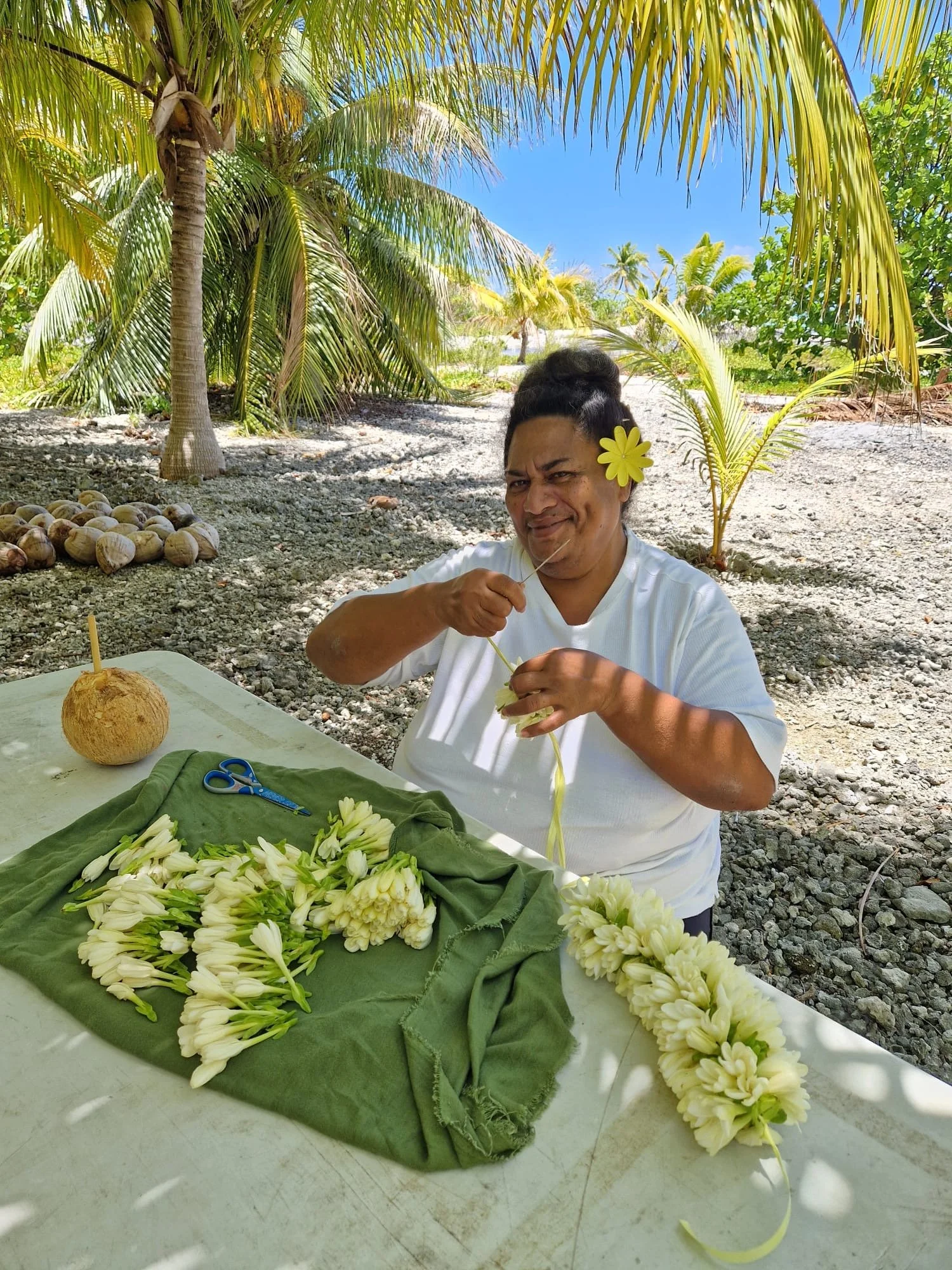
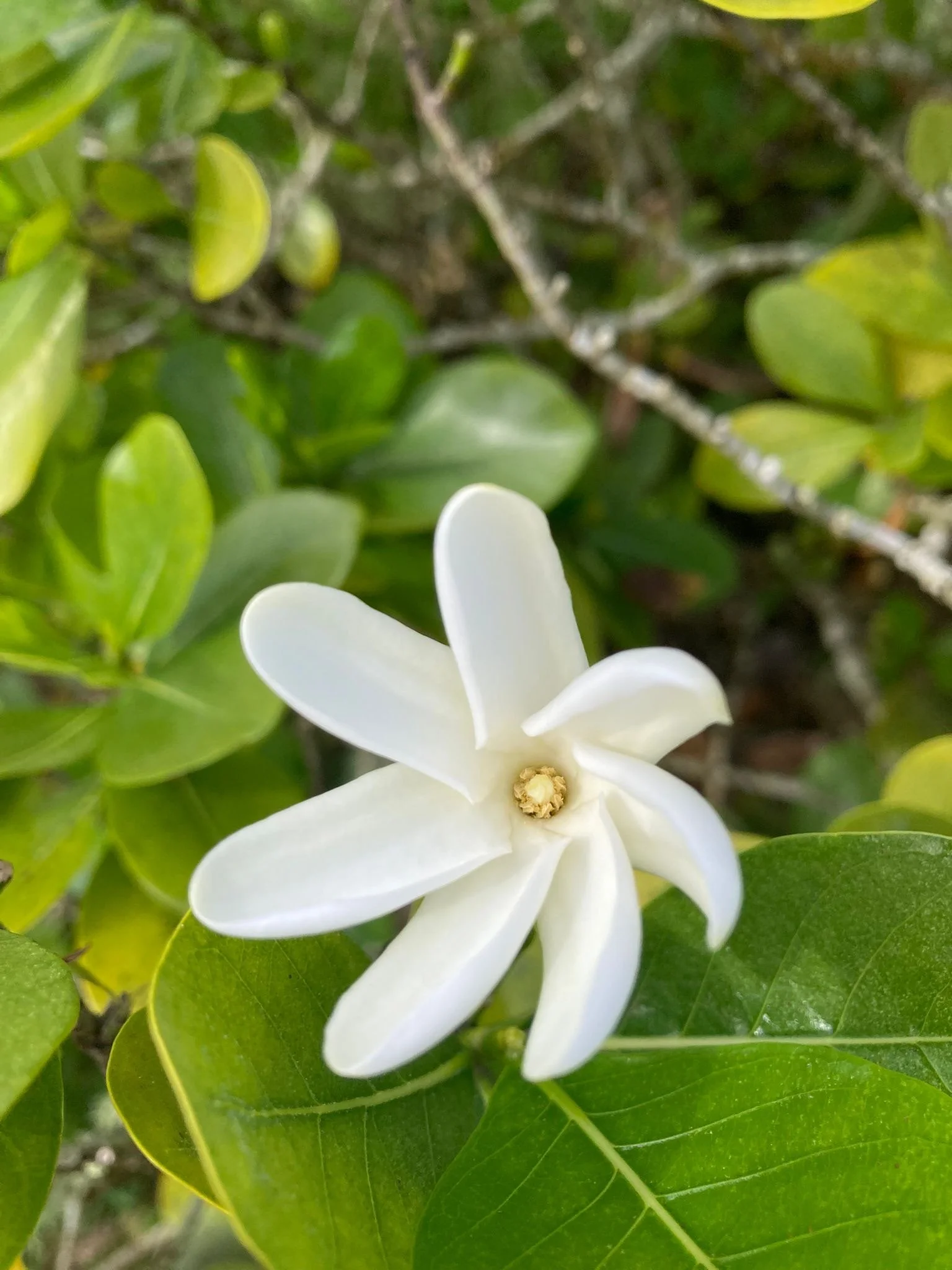
Meaning “flower” in Tahitian, tiaré—scientifically known as Gardenia taitensis—is a flowering shrub native to French Polynesia and widely regarded as a cultural emblem of the region. Belonging to the Rubiaceae family, the plant grows as an evergreen shrub with thick, glossy dark green leaves. Its white, waxy flowers—with typically five to nine overlapping petals—are intensely fragrant and bloom year-round in tropical conditions, opening most noticeably toward the end of the day.
In Polynesian societies, tiaré carries deep social and cultural significance. The blooms are used in leis (garlands) and hair adornments and symbolise welcome, respect, and connection. Wearing a tiaré behind the ear even communicates personal status. Ever-present in daily life the flower has become one of the most recognisable symbols of Tahiti and its neighbouring islands.
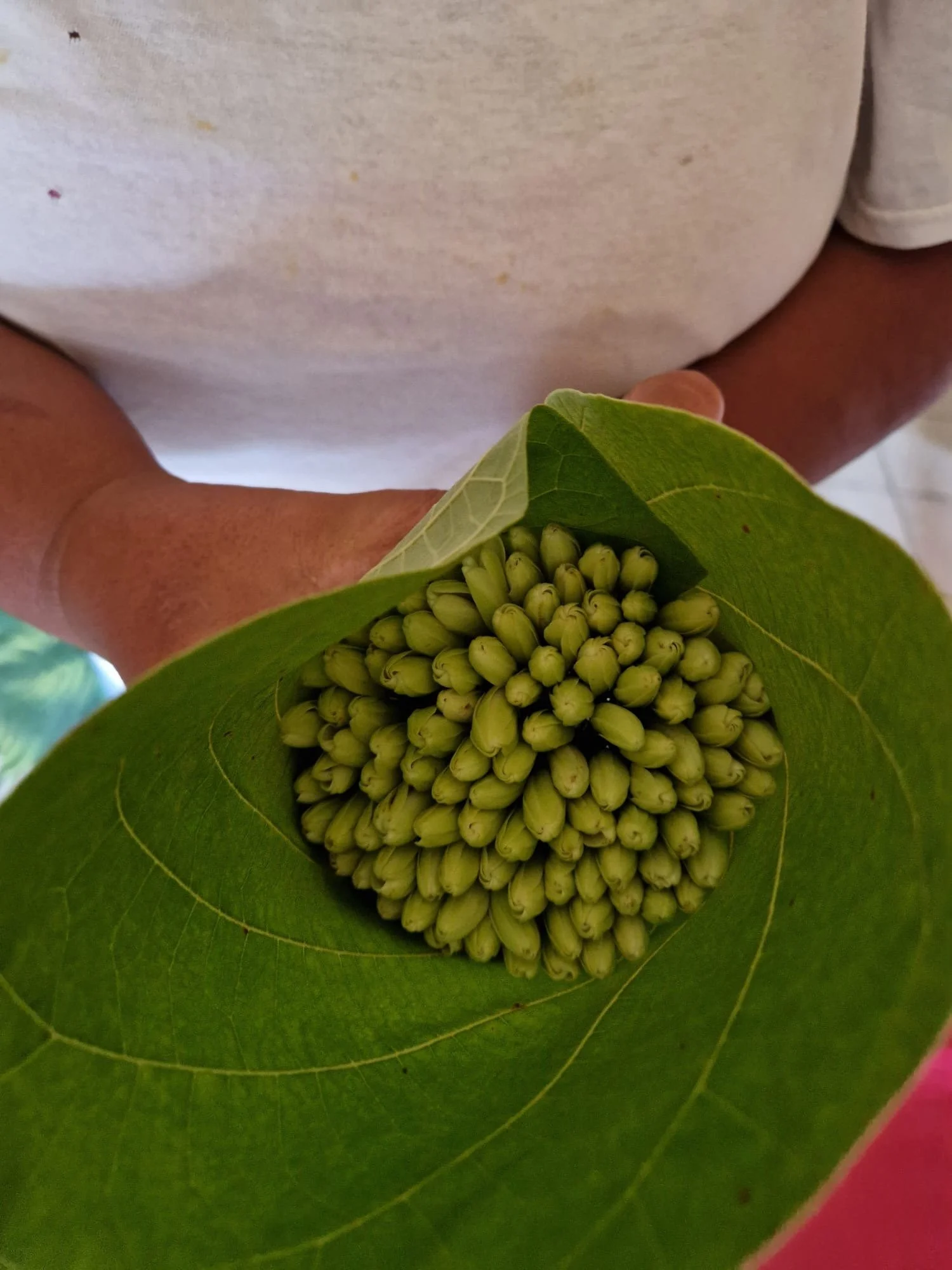
Tiaré plants are usually grown in gardens or small cultivated plots. The plants thrive in warmth, humidity, and well-drained soil, and their cultivation relies on patient, manual care informed by generations of local knowledge. Flowers are harvested by hand—often early in the morning when buds are still closed—to preserve their fragrance and delicate form. Each bloom must be picked gently, making the process both labour intensive and precise.
The economic importance of tiaré is closely linked to the iconic Monoï de Tahiti, crafted by macerating (softening via a liquid) fresh tiaré flowers in refined coconut kernel oil derived. The term “Appellation d’Origine Monoï de Tahiti” is a French legal certification that guarantees the product is made in Tahiti and according to protected traditional methods. Under this designation, monoï must be produced in French Polynesia according to strict rules, including a required number of fresh tiaré flowers per liter and a defined maceration time. Long used for skin and hair care, massage, and protection from sun, monoï remains central to local life while also being exported globally for cosmetics and perfumery.
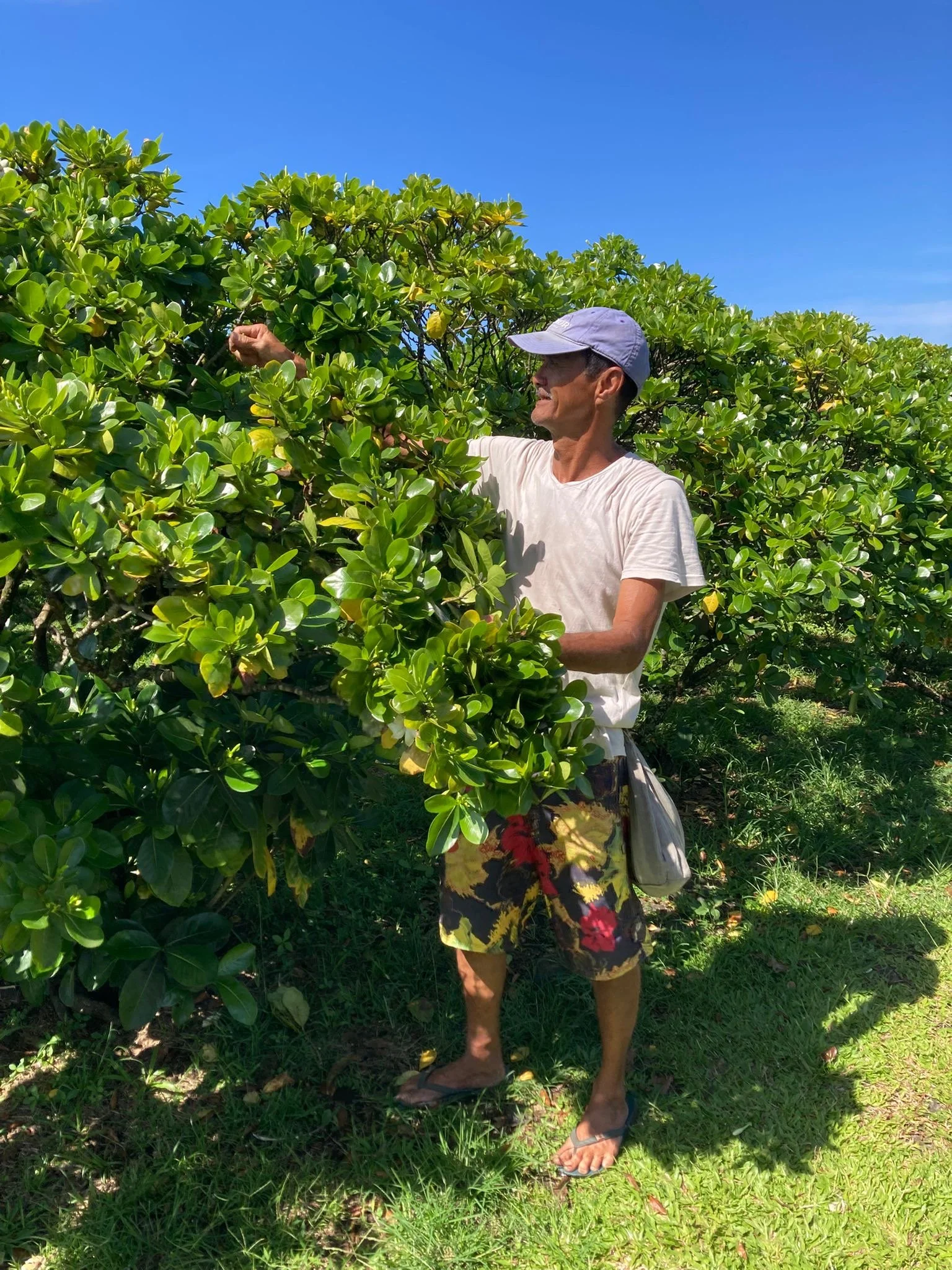
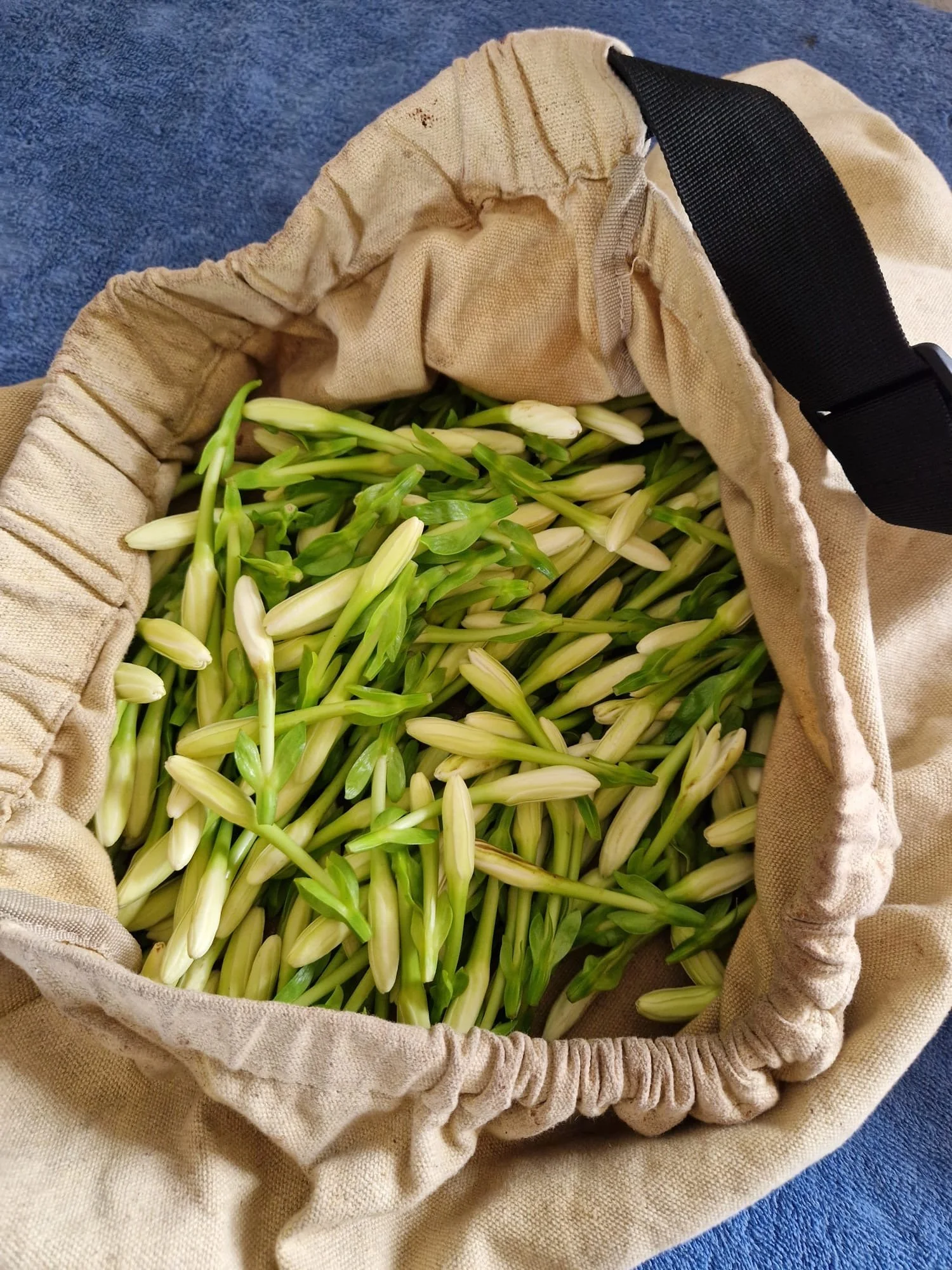
For many in French Polynesia, tiaré cultivation and monoï production contribute to livelihoods. Though not always a household’s sole income, they provide meaningful economic support for growers, harvesters, and those involved in processing and distribution—linking cultural heritage with economic opportunity, especially for small-scale and family run operations.
This close relationship between people and Tiaré also brings certain vulnerabilities to light. Even when direct impacts are not fully understood, social, cultural, and environmental dependencies can create pressures that make ethical sourcing practices essential—not only to support healthy ecosystems, but also to safeguard the communities whose lives are closely intertwined with the flower.
Two Tahiti based UEBT members, Laboratoire de Cosmétologie du Pacifique Sud (LCPS) and Parfumerie Sachet, are longstanding producers of tiaré and Monoï de Tahiti deeply rooted in these traditions. LCPS specialises in cultivating Polynesia’s botanical resources, including managing tiaré plantations and developing extracts in close collaboration with local growers. Parfumerie Sachet brings expertise in crafting monoï using long-standing infusion methods.
Both LCPS and Parfumerie Sachet hold UEBT certification for their tiaré and are also recognised members of the Monoï de Tahiti Association, the official body that brings together the main producers of Monoï de Tahiti and safeguards its Appellation d’Origine. As part of this association, members contribute to defending traditional know‑how while ensuring the integrity and identity of this emblematic Polynesian oil. They also develop knowledge, promote authentic Monoï, and protect its cultural and botanical heritage.
Ultimately, tiaré is a living emblem of Polynesian identity, sustained by local knowledge and manual care, and central to a product that connects island communities to global markets. Its future depends on continued respect for both the people who cultivate it and the biodiversity-rich ecosystems in which it grows.
Sources
Pacifique Sud ingrédients - https://pacifiquesud.fr/en/
Monoï de Tahiti Association
https://www.monoidetahiti.org
Tahiti Tourisme
https://www.tahititourisme.com