
Babassu
The tree of life
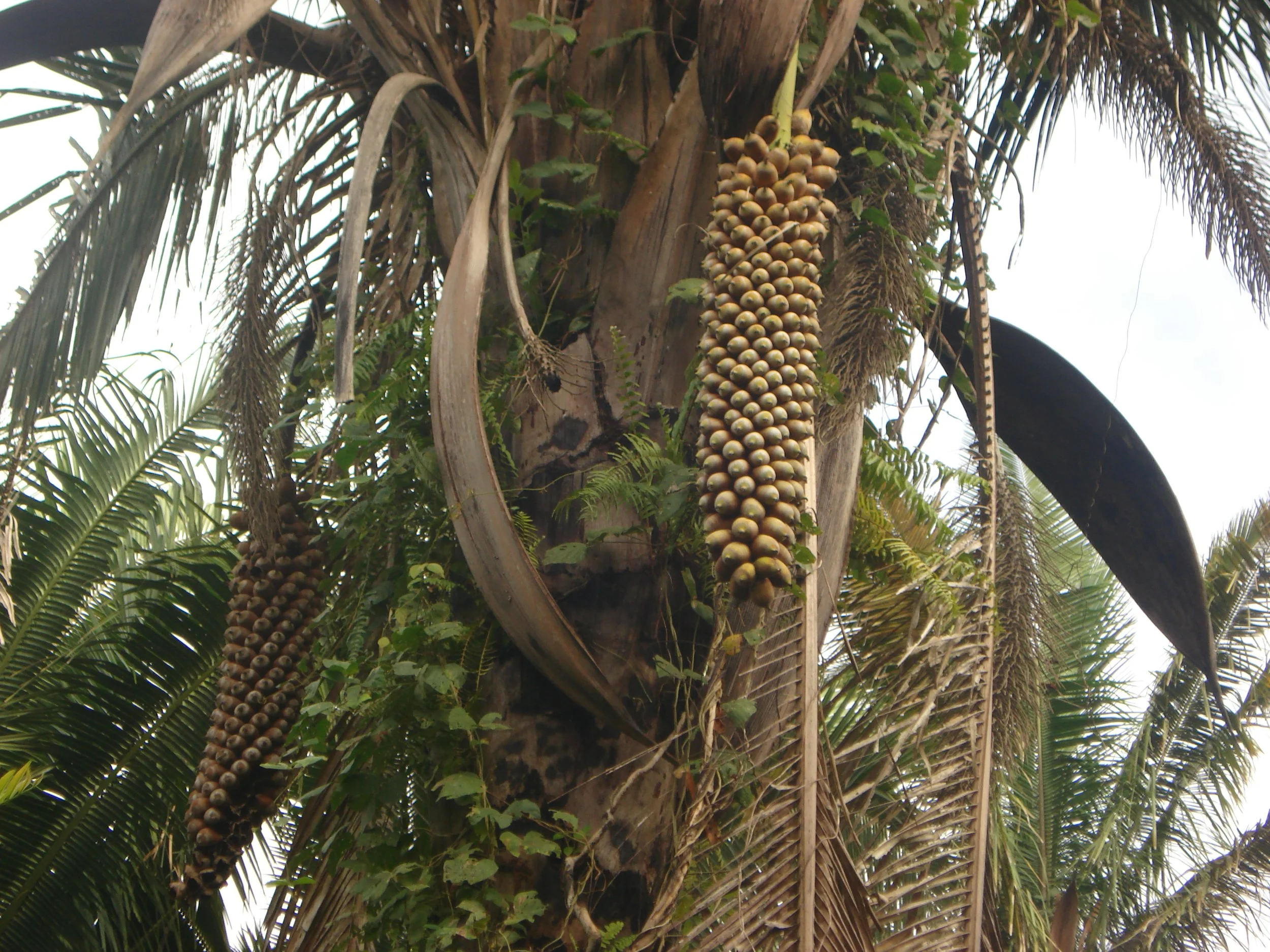
Babassu (Attalea speciosa) is a palm tree native to the transitional forests where the Amazon, Cerrado, and Caatinga biomes meet in Brazil. Known locally as babaçu, it has long been referred to in Maranhão region as the ‘tree of life’ — a reflection of how extensively it is used. Today, oil extracted from its kernels is gaining renewed attention across the cosmetics, food, and pharmaceutical sectors.
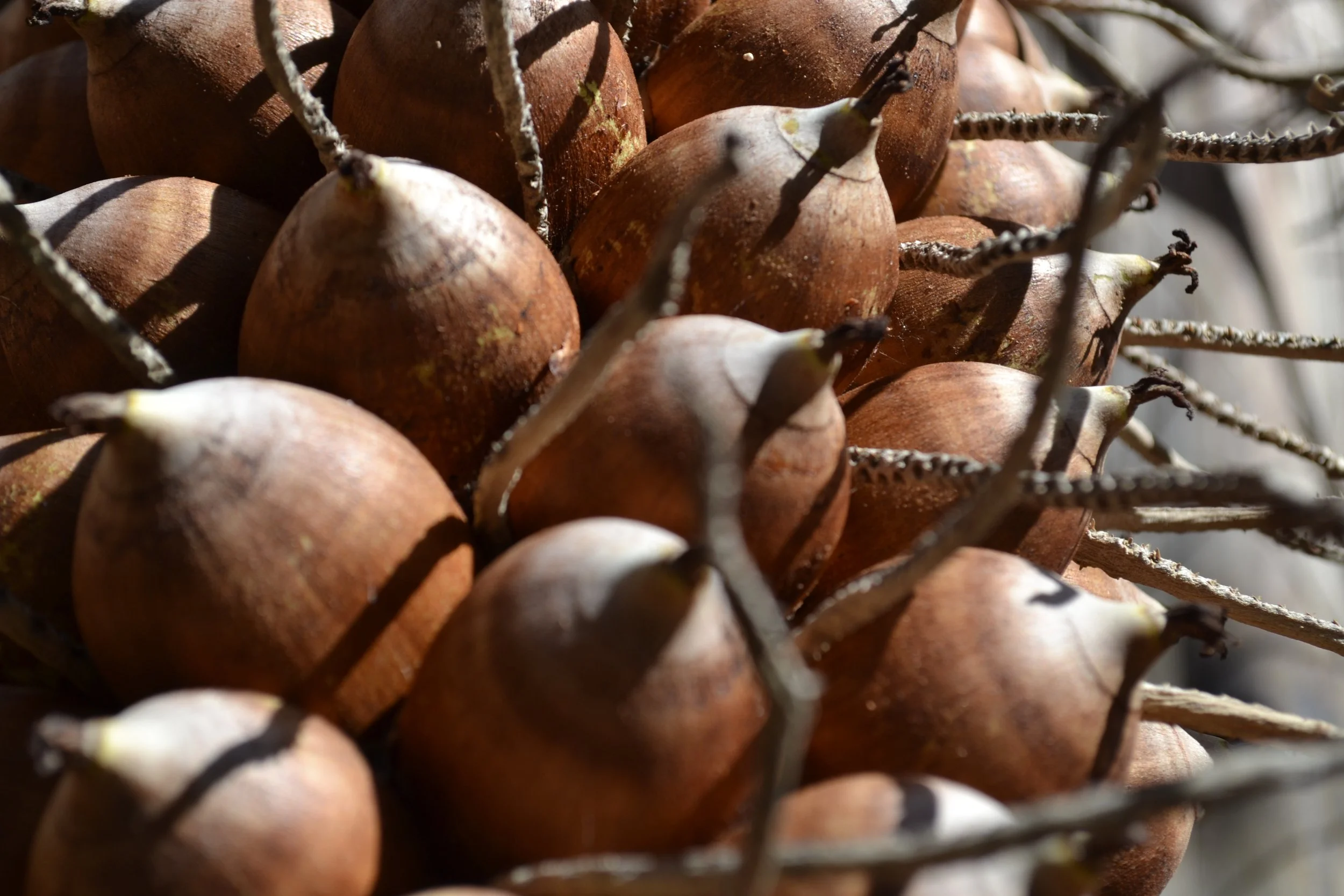
The tree grows slowly and can reach up to 20–30 metres. Its fruits are oval and slightly elongated, with hard shells that grow in in large bunches. Each flower cluster produces between 800 and 1,000 fruits. Inside each fruit are one to four oil-rich seeds, which represent the most valuable part of the plant.
Babassu is also a ‘pioneer species,’ capable of colonising degraded and deforested land and supporting the regeneration of native vegetation. In pasture areas of the Cerrado, it is sometimes considered a weed - a reflection of its resilience and its ability to persist where other vegetation has been cleared. Babassu forests, known as babaçuais, cover approximately 20 million hectares, mainly in Maranhão, Tocantins, Piauí, and Pará states in Brazil. The species also can be found in Bolivia, Guyana, and Suriname, although Brazil remains by far the main producer. Unlike many commercially significant oil crops, babassu is not cultivated in plantations. It is a wild-harvested species, with nuts collected only after they fall naturally to the ground, allowing the trees to remain standing.
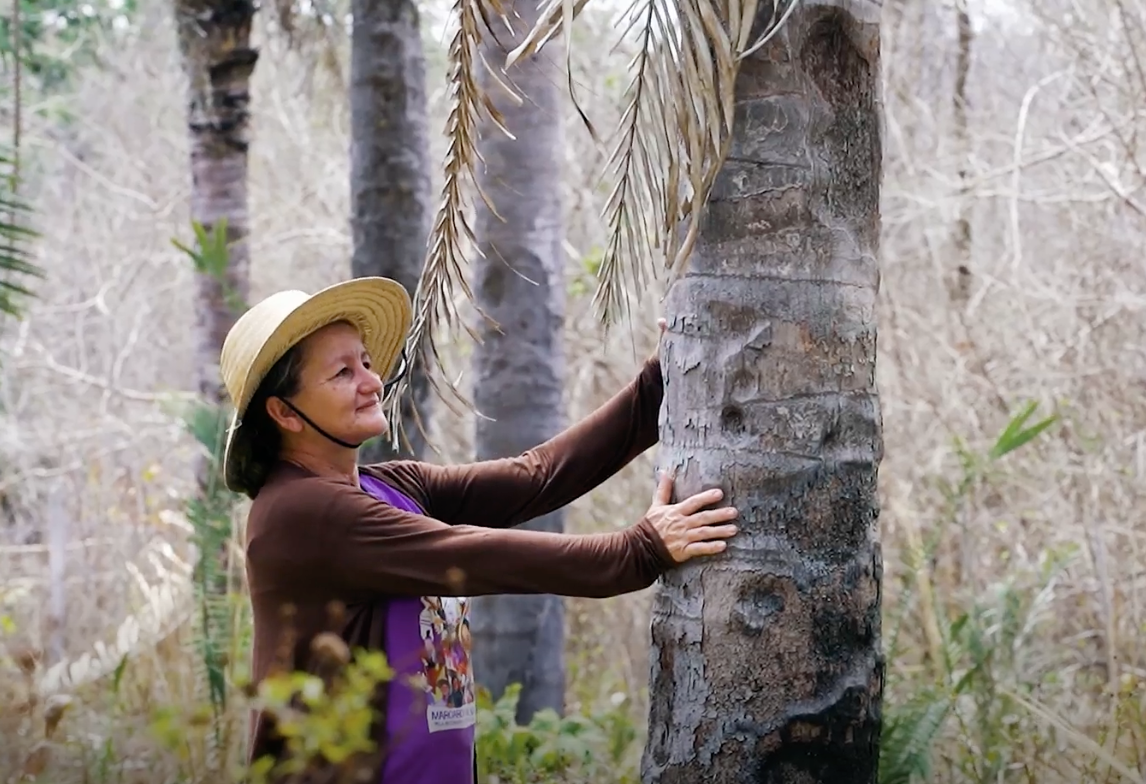
Collecting babassu nuts is physically demanding work, carried out predominantly by women known as quebradeiras de coco babaçu — babassu coconut breakers. Across northern and northeastern Brazil, their work is deeply embedded in community life, passed down through generations alongside shared knowledge. Collection takes place throughout the year, with peak periods during the dry season, from September to February. Each day, women head into house gardens, pasture lands and babassu forests to gather nuts that have fallen naturally from the palms. Heavier fruits — which contain more kernels — are preferred, but not all fruits are taken: some are deliberately left behind to support wildlife and allow natural regeneration. Back in their communities, the nuts are cracked open with hand tools.
Domestically, every part of the palm is used: leaves for roofing and weaving, shells for fuel, the fibrous mesocarp ground into flour for porridge, and the kernels pressed into oil for cooking, soap-making, and fuel. In total, the babassu palm is said to yield more than sixty different products, making it one of the most versatile wild plants in the Amazon region. For many quebradeiras, babassu is more than a resource — it is their primary source of livelihood. As one harvester sings in this video (add link) “People would be naked if it weren’t for babassu”.
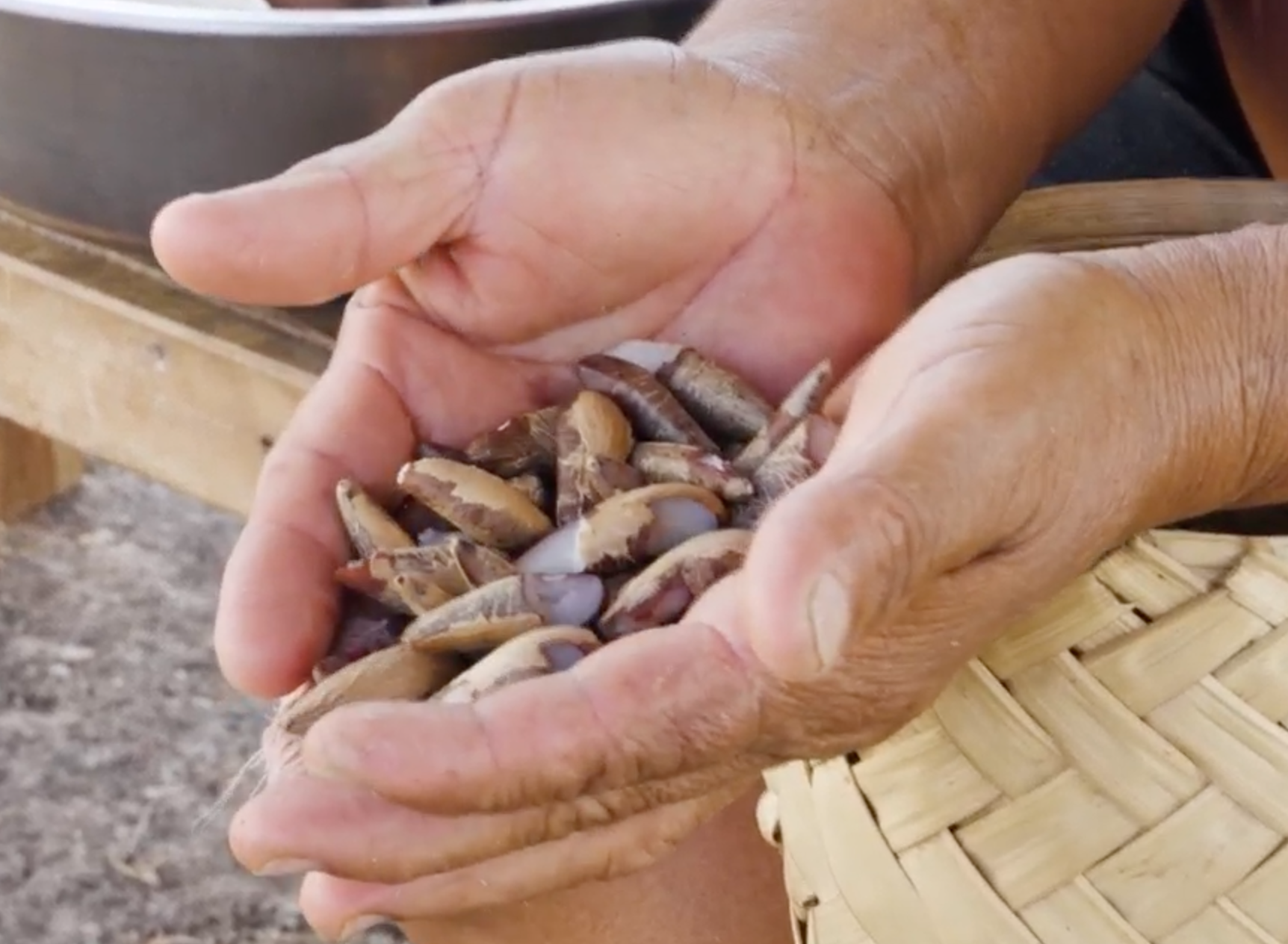
For international uses, the nuts are transported to local collection points or cooperative warehouses. The kernels are dried and pressed to produce babassu oil, a pale, semi-solid fat that melts quickly on the skin. The oil is widely used in cosmetics such as moisturisers, cleansers, and hair products, valued as a lighter weight alternative to coconut and palm kernel oils.
Challenges facing the sector
The babassu sector faces growing pressures. Deforestation driven by cattle ranching and soy plantations has destroyed significant areas of babaçuais since the late 1980s, while cheaper imported palm oil from Southeast Asia has displaced babassu in industrial markets. Because babassu trees take up to 90 years to bear fruit, lost forests cannot easily be replaced.
The consequences are visible in declining production. Beyond deforestation, the sector also faces low level of mechanisation, labour shortages, and persistently low prices for the raw material, all of which reduce the economic viability of harvesting for individual families.
Supporting the future of babassu
Efforts are under way to strengthen babassu supply chains in ways that benefit both communities and biodiversity. UEBT was a partner to GIZ on its AgriChains project to support the development of more responsible babassu supply chains over 2024 and 2025. It brought together UEBT members, other partner companies, cooperatives, and local organisations working along the value chain.
Among the partners in the project was Natura, a Brazilian cosmetics company and UEBT founding member that has sourced ingredients from Amazon communities for its EKOS line since the early 2000s. At the community level, COPPALJ (Cooperativa dos Pequenos Agricultores e Agroextrativistas de Lago do Junco), which recently joined UEBT, plays a central role. Today, its 218 members — around 70% of whom are women — produce certified organic babassu oil using mechanical extraction methods without solvents, supplying companies like Natura.
A key priority of the project was to deepen impact along the supply chain, ensuring the value created translates into better livelihoods for the women who depend on babassu, alongside improved working conditions. The project also supported the development of a biodiversity action plan for babassu in Maranhão, building on good practices already in place.
As global demand for natural ingredients continues to grow, babassu stands out as an example of how wild-harvested resources can support livelihoods while maintaining forest ecosystems. Its future will depend on maintaining this balance — ensuring that the women who sustain the babassu tradition are fairly rewarded, and that the landscapes they depend on continue to thrive.
Sources
Initiative 20x20 (2018). Growing a sustainable, local alternative to imported palm oil in Brazil.
Shoemaker, S. (2019). Babassu Oil: Uses, Benefits, and Side Effects. Healthline.
Equal Times (2025). In Brazil's forests, babaçu nut gatherers battle for communal rights.
Trellis (2024). Natura's formula for cultivating Indigenous relationships in the Amazon rainforest.
https://waronwant.org/sites/default/files/The%20Babacu%20Breakers%20of%20Brazil.pdf
https://www.bloomberg.com/features/2024-brazil-amazon-rainforest-protection-poverty/