
Annual Report 2025
Dear colleagues,
2025 marked the first year of UEBT's strategic roadmap to 2030, a programme centred on conservation and regeneration across botanical supply chains, and on deepening outcomes for the people involved. We advanced on our key intervention strategies, including supply chain assessments and improvement projects in sourcing areas, responsible sourcing due diligence, and a strengthened platform for precompetitive collaboration.

This unfolded against a shifting backdrop. Geopolitical instability and economic pressure are reshaping the corporate sustainability landscape. Sustainability commitments are being scrutinised, redefined, and in some cases scaled back, with a sharper lens on business value and reduced tolerance for sustainability premiumisation.
In this environment, responsible sourcing is not retreating; it is being reframed as what it always was: a business-critical function. The commitments and reporting of companies in the UEBT platform reflect this clearly. Botanicals are signature ingredients, valued for their sensory properties, efficacy, and iconic product and brand identity. Securing long-term, reliable access to these materials requires understanding and actively collaborating with actors of the supply chains they come from. The supply chain assessments that are part of the UEBT certification and verification programmes directly supports that objective, as do the various supply projects, independently run by UEBT member companies, or together with UEBT teams in sourcing areas.
Our 2025 flagship report examined the impact of climate change on botanical supply chains, and the findings were unambiguous. Most companies in the UEBT platform are already experiencing adverse effects. The report demonstrated that investment in biodiversity actions strengthens supply chain resilience, supports local livelihoods, and reduces sourcing risk. It makes the case for regenerative practices developed in partnership with local suppliers. Critically, it integrates the climate and biodiversity agendas into a single, actionable framework: a practical necessity when resources are constrained and the botanical ingredient segment remains a small but strategically significant category. The 2025 flagship report sets a clear direction for the years ahead.
Supply chain due diligence efforts continue to advance. This responds not only to regulatory requirements, but also to client expectation and reputational risks. UEBT's due diligence workstream, which includes risk databases and precompetitive collaboration tools, is an integrated component of companies' due diligence strategies. For example, the UEBT responsible sourcing risk database provides structured, specific information on botanicals that generic tools cannot replicate.
Precompetitive collaboration is increasingly recognised as effective path forward in some supply chains - and 2025 saw meaningful progress. The Bulgaria Rose Working Group exemplifies what becomes possible when supply chain actors align around shared challenges, including on human rights. Collaborative action of this kind is a cornerstone of the UEBT 2030 strategy, and further initiatives are in development.
As we move into the next phase of this work, our purpose remains constant: to bring companies together on sourcing that respects people and biodiversity, and to help build botanical supply chains that are resilient, regenerative, equitable and commercially viable for the long term. We thank our members and partners for their continued commitment to this agenda.

1. UEBT Strategy to 2030
At the start of 2025 we introduced our new strategic directions for 2030. Some highlights include:
We sharpened UEBT’s focus on botanicals and their sourcing areas
We re-stated our core that is ‘sourcing with respect’ and shared what this means in practice:
botanicals benefit people and biodiversity in sourcing areas
UEBT works with companies to drive positive impacts in different production systems: wild collection, agroforestry as well as agriculture
UEBT collaborates with companies in priority sectors:
- beauty and personal care
- herbs and spices
- botanical beverages
- natural flavours
- natural pharma
The strategic directions for 2030 are:

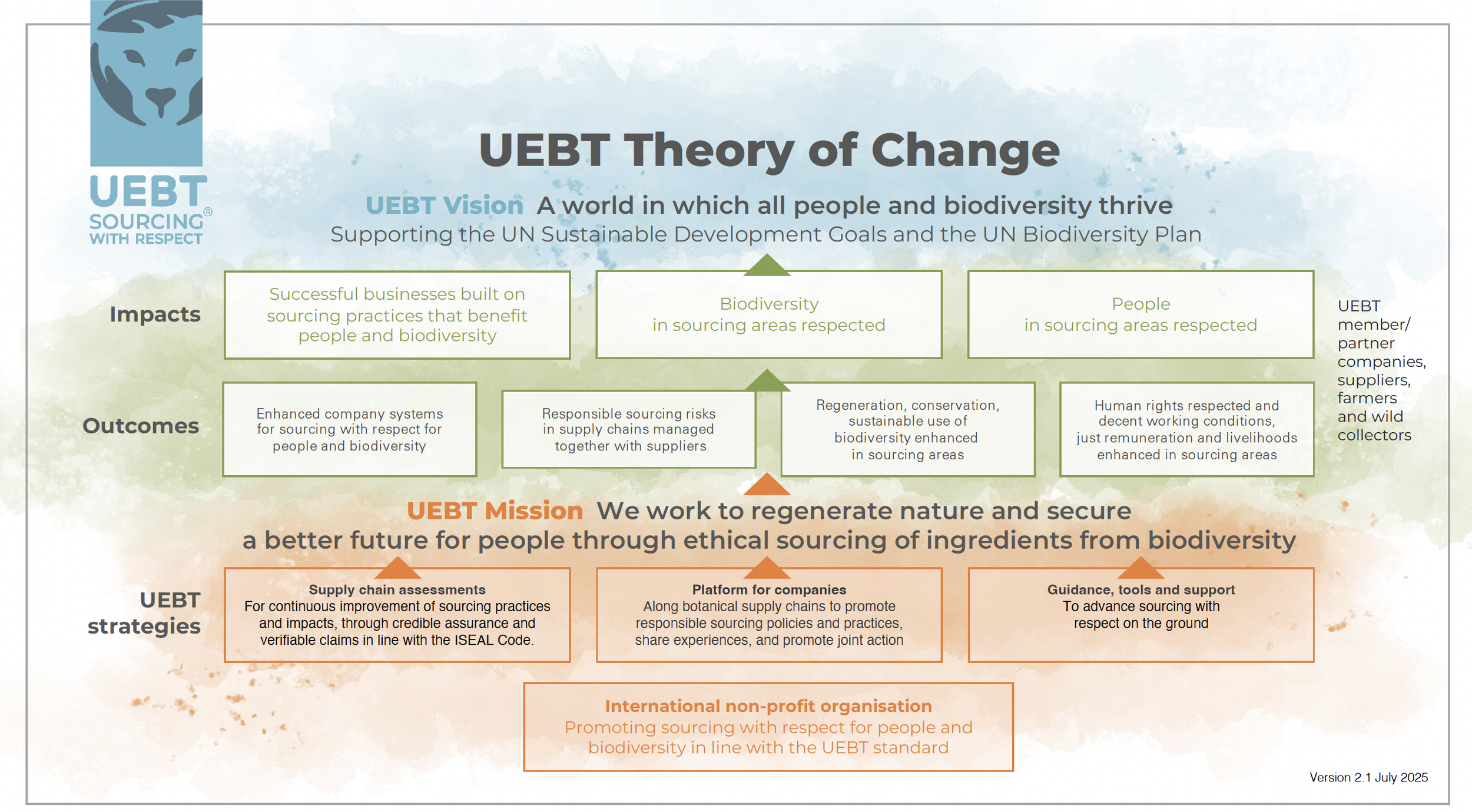
UEBT’s 2030 strategy supports our vision of a world in which all people and biodiversity thrive, and our mission to regenerate nature and secure a better future for people through ethical sourcing of ingredients from biodiversity.
We advance this vision and mission through our Theory of Change (pictured below) that also advances the UN Sustainable Development Goals and the UN Global Biodiversity Framework.
2. New Companies in the UEBT Platform
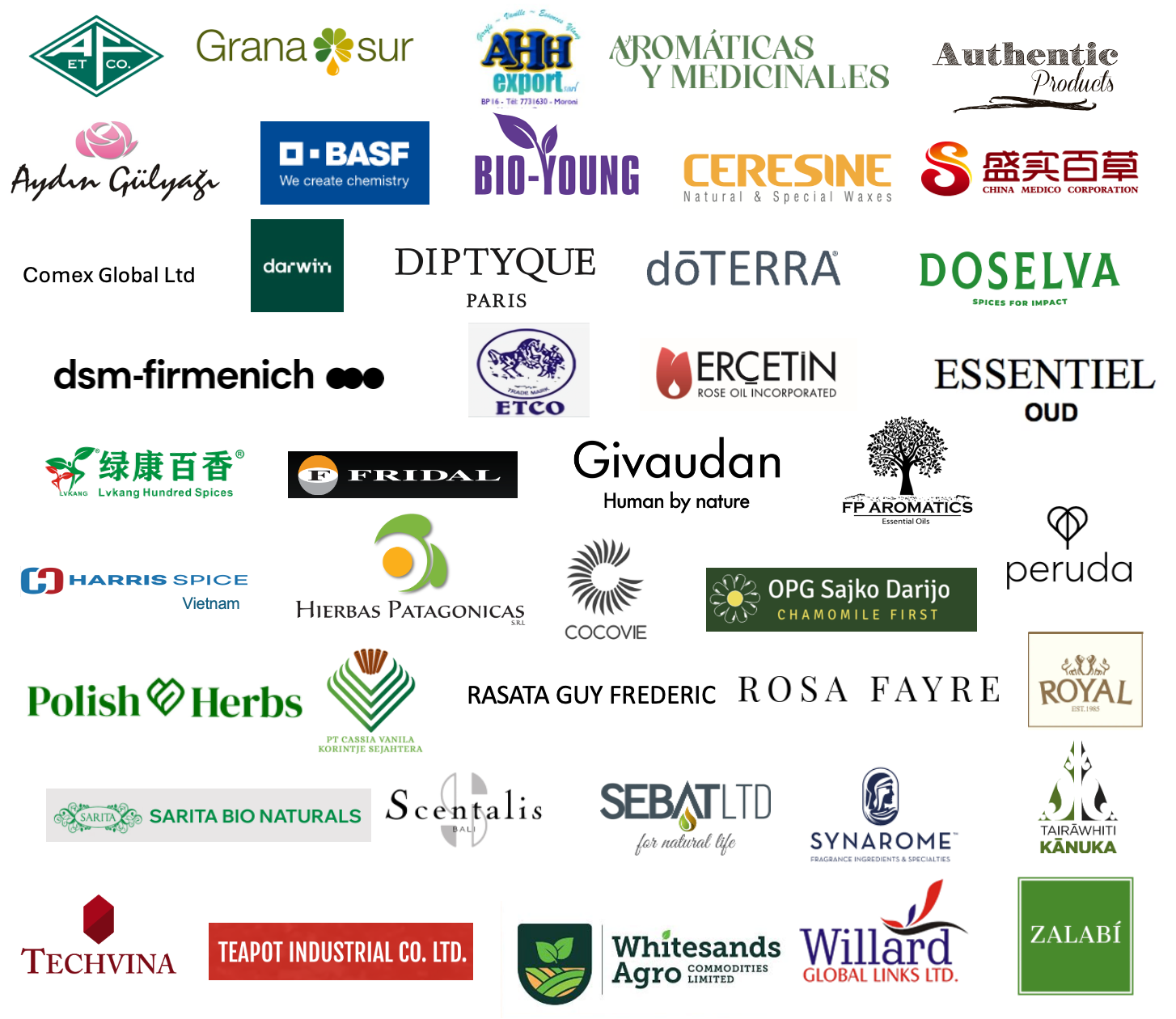
2025 saw brands Diptyque and doTERRA join the UEBT membership platform, and international processing companies such as BASF Beauty Care and Givaudan joined as well. Overall membership grew 13% over the year, from 190 members at the end of 2024 to 213 companies in the UEBT platform by the end of 2025.


New UEBT members in 2025
3. Impact Highlights
For more information on impact check our impact webpage.

UEBT standard consultation reaches wide set of global stakeholders
In 2025 we began our revision of the UEBT standard. The revision was based on a review carried out the previous year that determined the standard was still fit for purpose but required a limited revision focused on improving the standard where needed for clarity, or improved applicability or impact.
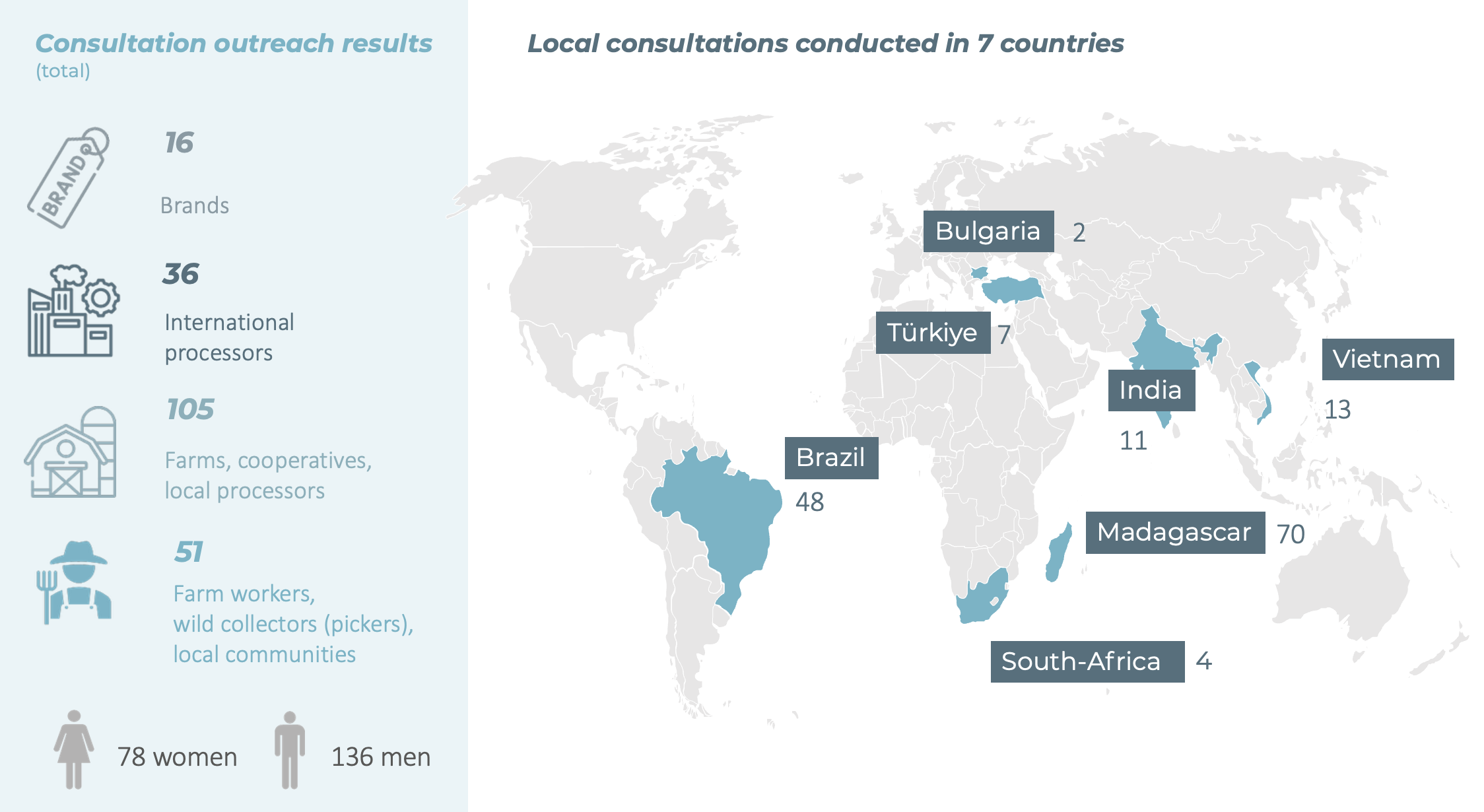
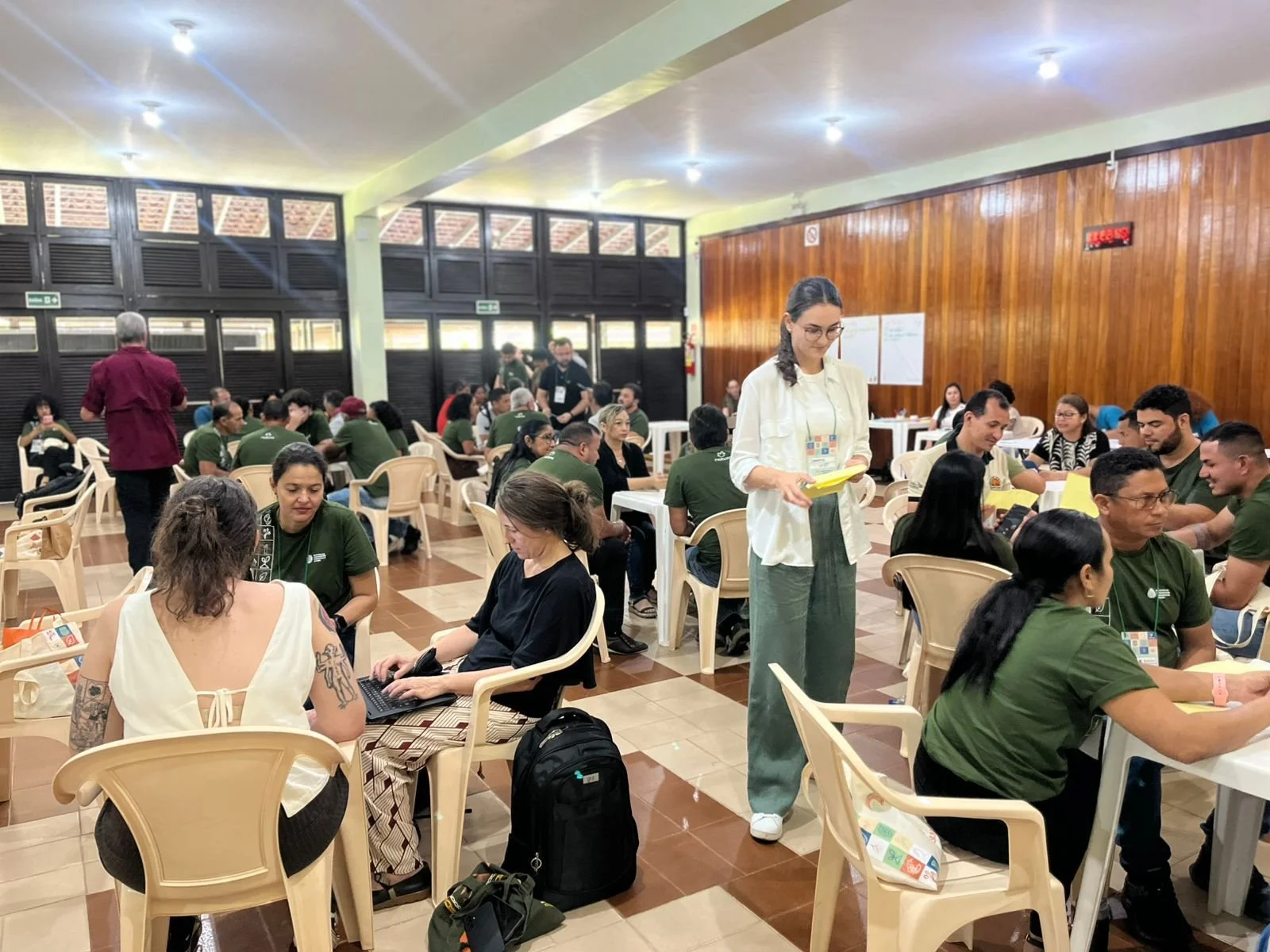
We held a consultation focused on users of the standard, with a wide variety of ways people could provide comments, including in-person at the UEBT members’ exchange, via an online survey, and in workshops held in Brazil, Bulgaria, China, India, Madagascar, South Africa, Türkiye, Vietnam, Madagascar engaging both UEBT and non UEBT members. UEBT also held community-level workshops with local groups in Madagascar and the Amazon region of Brazil.
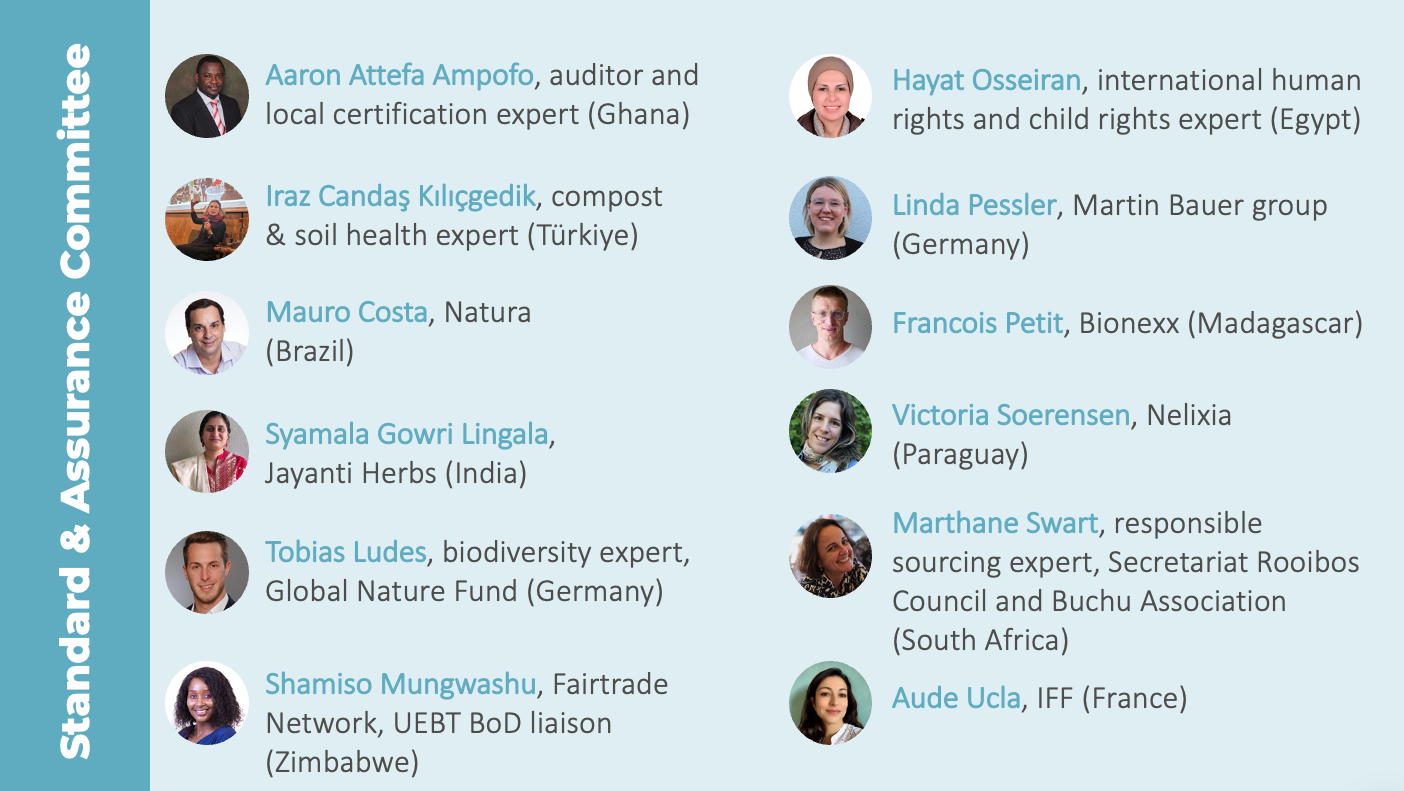
UEBT shared a ‘consultation draft’ that was well received by stakeholders throughout the consultation period. The UEBT Standard and Assurance Committee continues to oversee the process, which continues into 2026 for finalisation of the second consultation draft and field testing before the new standard is published.
227 participants representing companies, organisations or communities joined the consultation process
From 25 countries
Online consultation opportunity and local consultations conducted in 7 countries


Companies receive specialised guidance on botanicals for key regulations
In 2025, UEBT produced specialised briefs on three major EU sustainability regulations. These briefs interpret complex requirements through the lens of botanicals supply chains. By translating regulatory developments into practical guidance, UEBT is supporting and guiding companies to understand what the changes mean for their sourcing systems, supplier relationships, and biodiversity commitments. 3 briefs were made available:
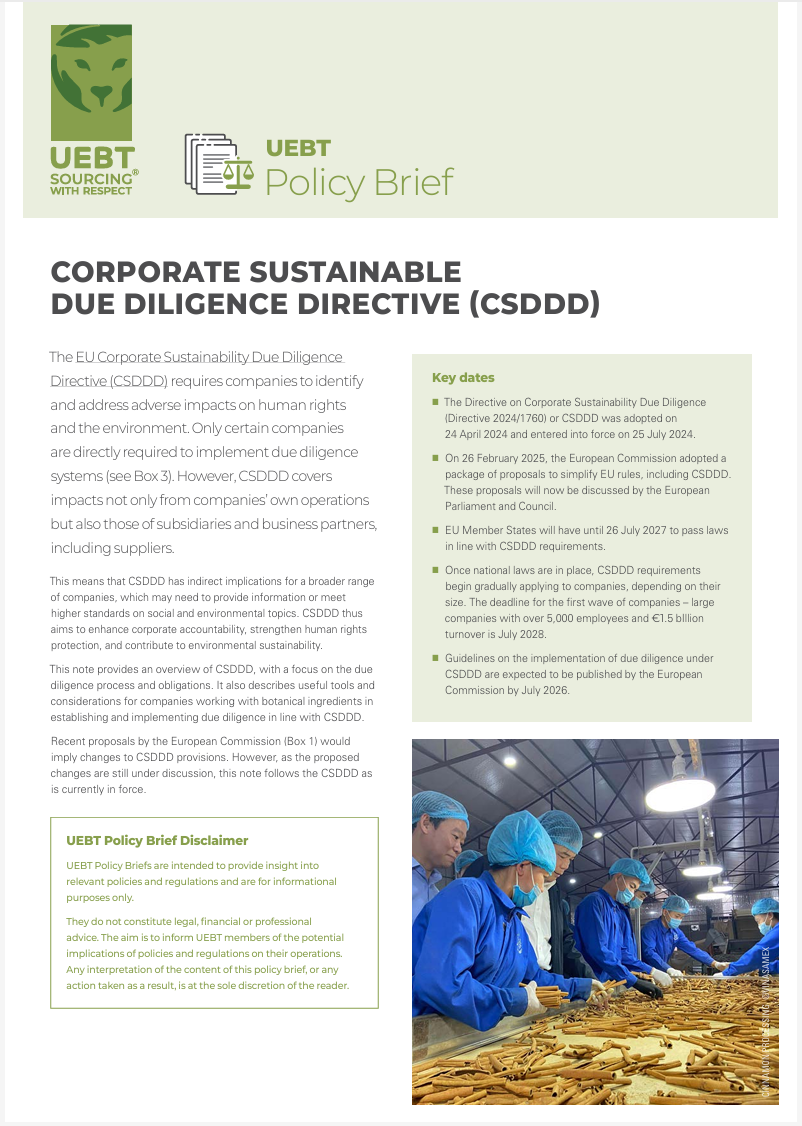
Corporate sustainable due diligence directive (CSDDD)
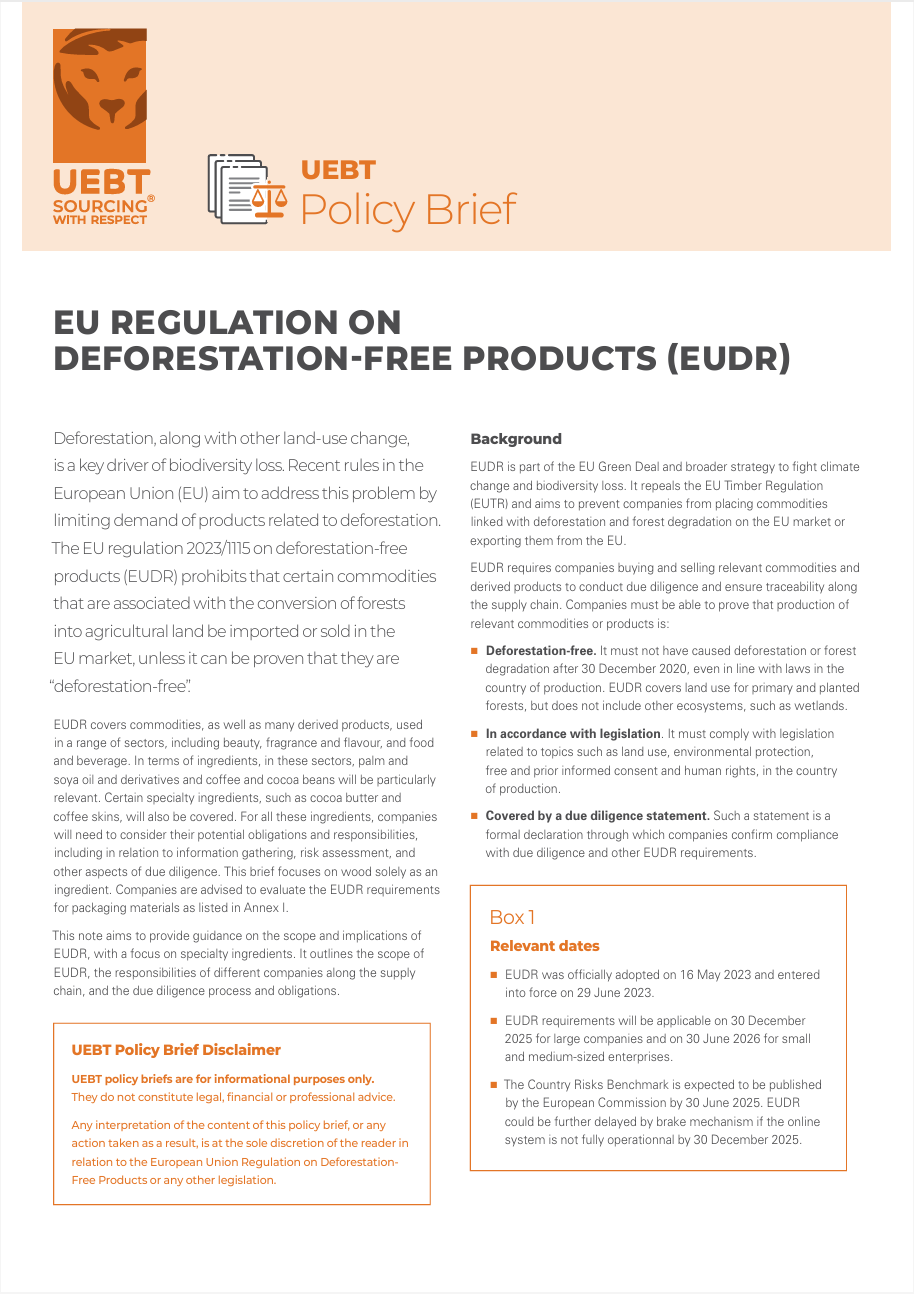
EU Deforestation Regulation (EUDR)
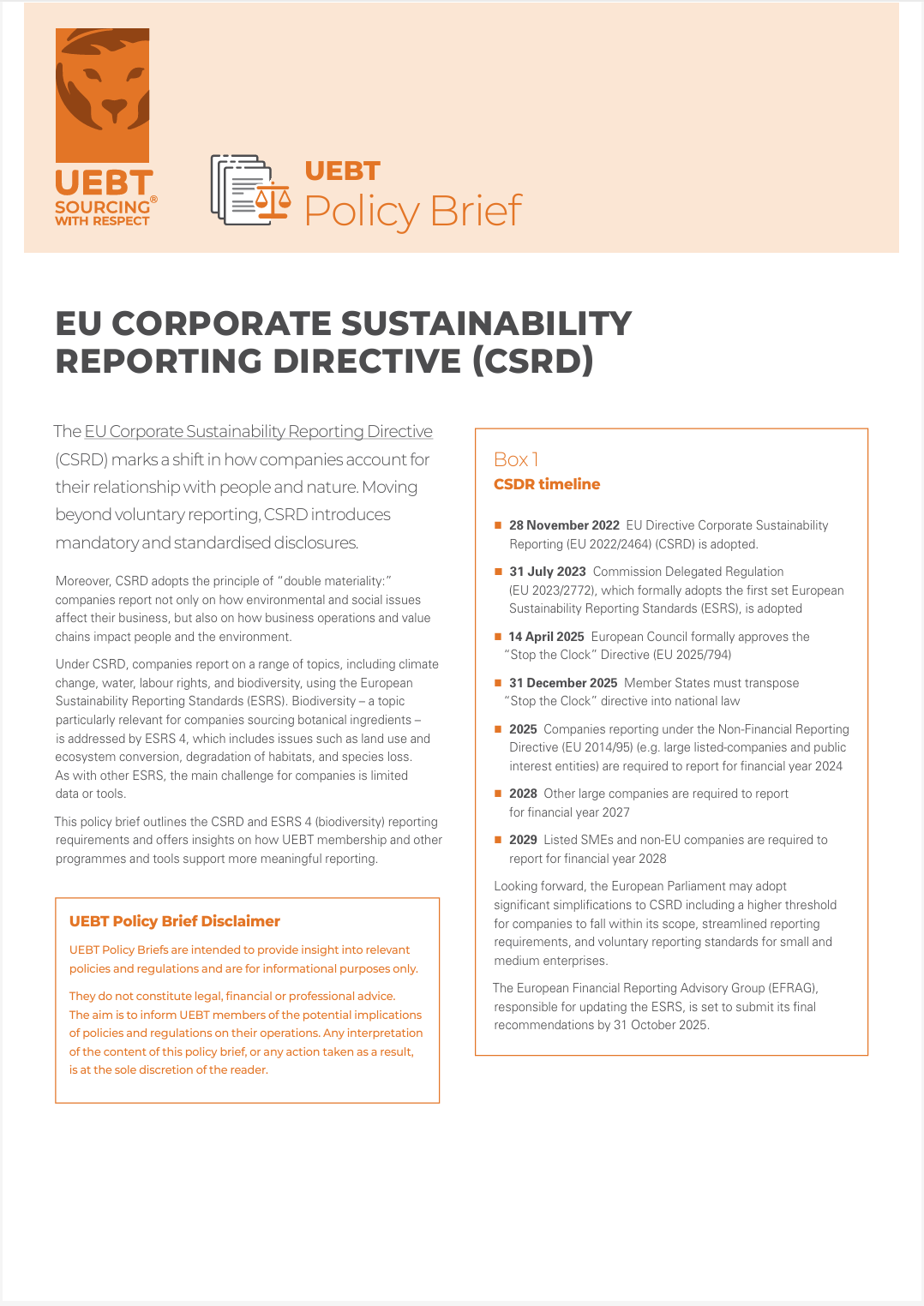
Corporate Sustainability Reporting Directive (CSRD)
Conclusion of three strategic projects: Driving impact in botanical sourcing landscapes
UEBT partners with companies, governments and local organisations to strengthen sourcing practices that respect people and biodiversity. Our strategic projects take place at landscape, sector, and supply chain levels. In 2025, we successfully concluded three important projects:
BioInnovation Africa - UEBT was partner to GIZ in this two-phase, 7 yearlong project. The project accelerated local transformation processes toward sourcing with respect for people and biodiversity in Africa by promoting sourcing improvement plans in selected biodiversity-based supply chains.
Supporting the implementation of the Global Biodiversity Framework – UEBT worked to support this international biodiversity agreement as partner on the project ‘Strengthening National Implementation of Global Biodiversity Targets’. The goal was to advocate for biodiversity and people-centric sector transformation pathways in UEBT target sectors and promote these pathways in national biodiversity strategies and actions plans (NBSAPs) processes in Brazil, Colombia, and Madagascar. UEBT developed and disseminated sector transformation reports, case studies, and recommendations; and led public-private dialogues in the three countries.
Socio‑biodiversity supply chains and livelihoods in Northeastern Brazil – UEBT improved working conditions and incomes in socio‑biodiversity supply chains by strengthening the forest bioeconomy and supporting sustainable supply chains (such as Babassu and Carnauba), while enhancing local livelihoods and conserving the Caatinga and Cerrado biomes.
These projects reflect UEBT’s commitment to practical, field level impact that can build resilient supply chains, and ensure that people and biodiversity can thrive. Learn more about these projects via the resources linked below.
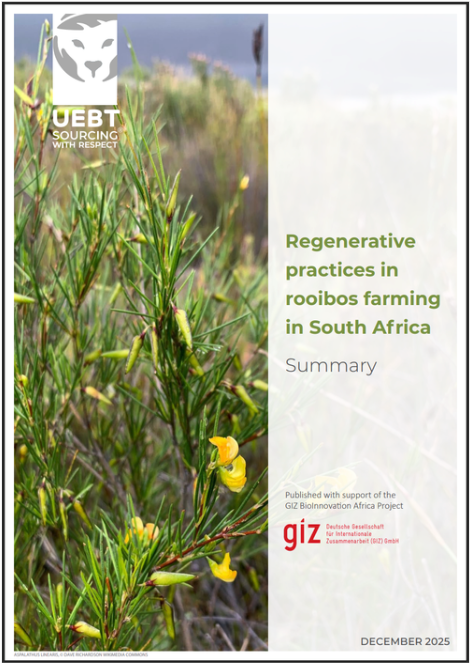
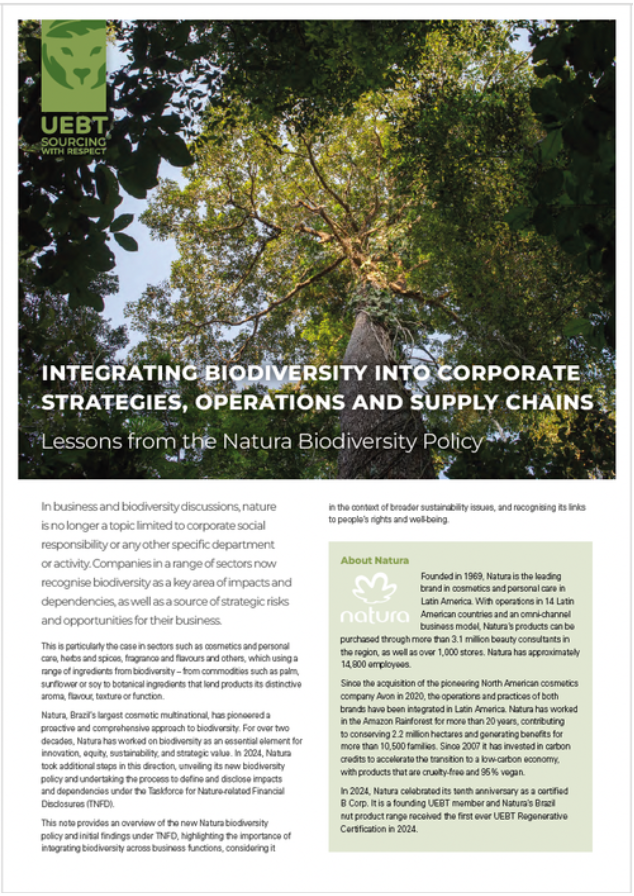
UEBT’s flagship publication offers first of its kind sector-wide look at how biodiversity actions build resilience
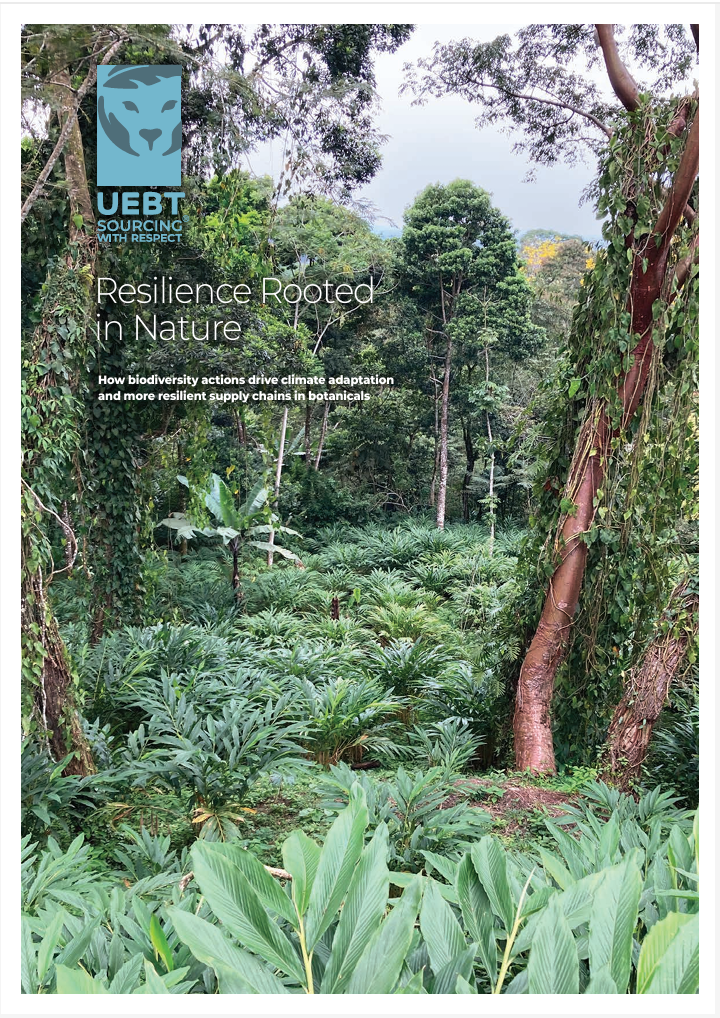
Resilience Rooted in Nature
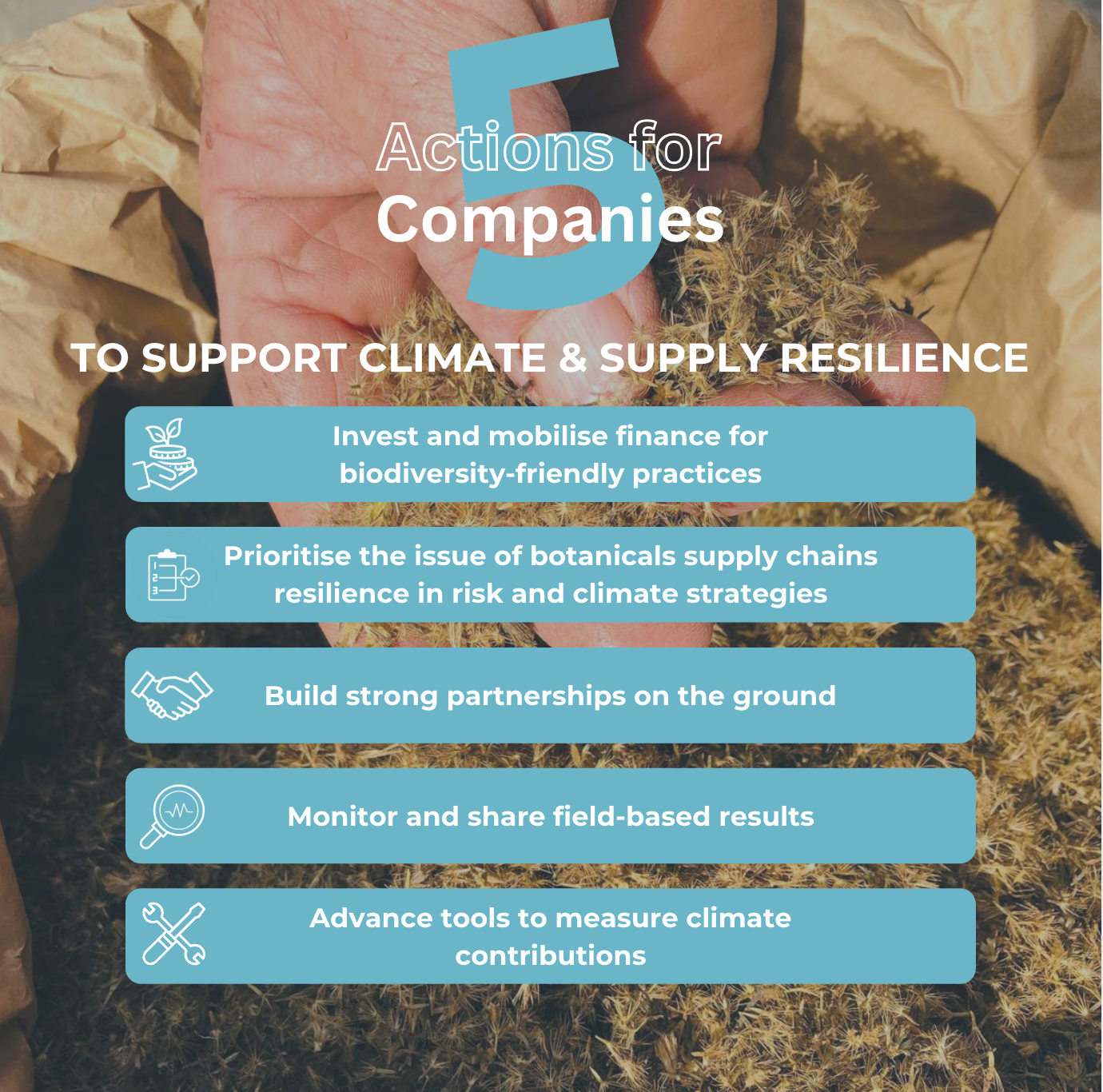
UEBT’s “Resilience Rooted in Nature” flagship report explored how integrating biodiversity-friendly actions into responsible sourcing strategies strengthens climate adaptation and resilience in botanical supply chains. Designed for companies, sourcing partners, policymakers and other stakeholders working with botanicals, UEBT offered evidence and real-world examples to help businesses rethink their sourcing approaches, reduce risks from climate change, and support long-term supply stability.
The report showed that biodiversity actions help build climate resilience and more robust botanical supply chains by stabilising yields and reducing vulnerability.
It highlighted evidence and examples of biodiversity-friendly practices improving soil health and resistance to pests and the negative effects of climate change.
We highlighted that companies could advance climate and nature goals by integrating biodiversity into risk management and sourcing strategies.
We encouraged businesses to prioritize vulnerable botanical supply chains and to invest in biodiversity efforts where future climate risks are highest.
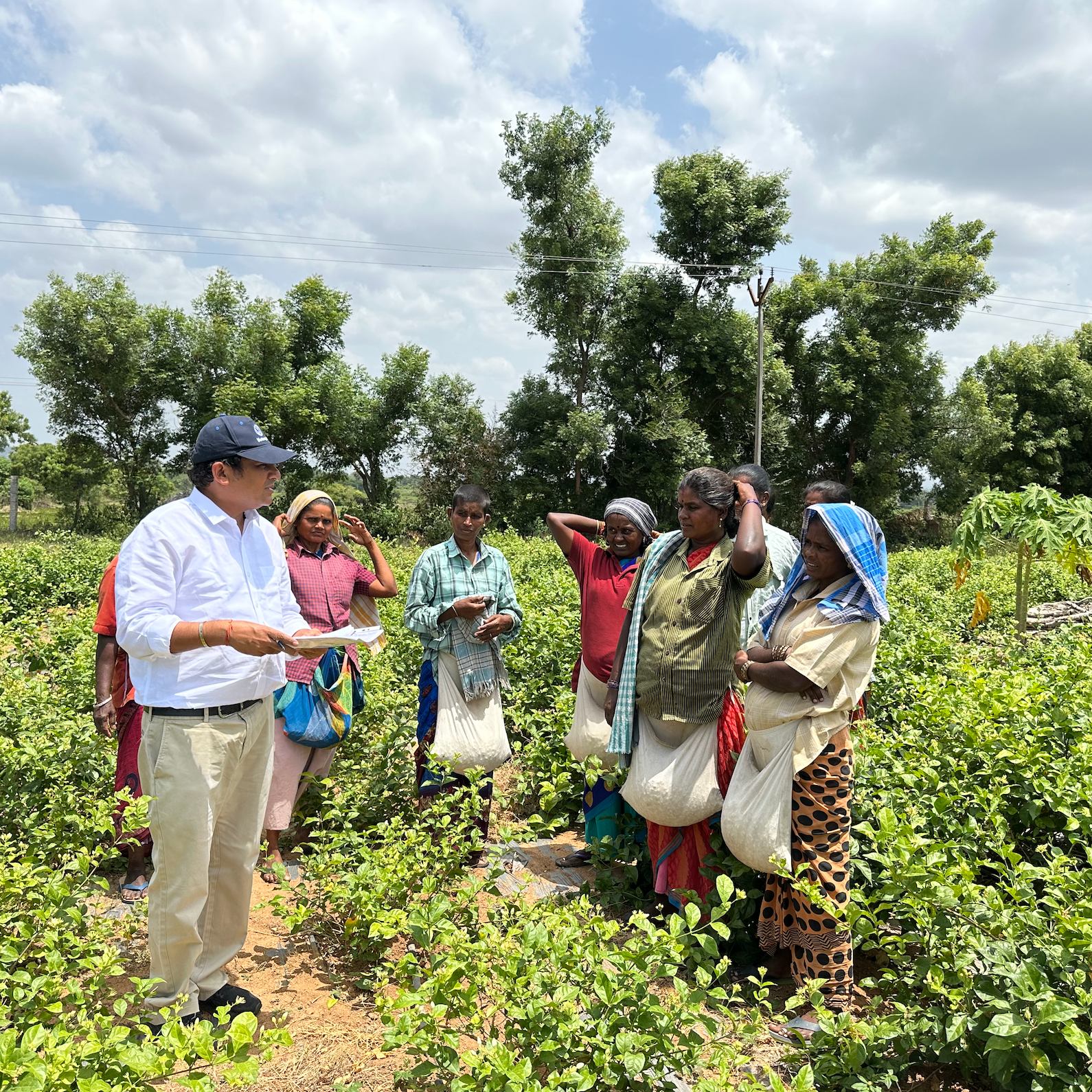
Sureel, UEBT South Asia representative in India for Jasmine
Responsible sourcing risk database expands and responds to sourcing needs
In 2025, UEBT increased by 20% the number of risk profiles in the UEBT Responsible Sourcing Risk Database, reaching 260 risk profiles by end of December. We used valuable feedback we received from users at the beginning of the year to prioritise risk profiles that are of most interest in sourcing.
Each individual risk profile focuses on one natural raw material in a specific country, e.g. Marula in South Africa, Ginger in Vietnam, etc. The information looks at more than 25 indicators to provide scores on social and environmental risks found in conventional, uncontrolled supply chains for that specific natural raw material in that geography.
In 2026, UEBT will be continuing to work on expanding and improving both the content and the interface of the UEBT risk database, prioritising feedback gathered from users. The database will be accessible from the new and improved version of UEBT’s platform, Grove, that is coming in 2026.

4. Sector Collaboration
UEBT’s work to promote sector collaboration strengthens the roots of botanical supply chains by bringing together various stakeholders – from companies, producers, and international, national, and local partners together in voluntary, precompetitive initiatives that address shared risks and unlock collective solutions. Across efforts such as the IFRA-UEBT Responsible Sourcing Initiative, the Working Group on responsible sourcing of Guaiac Wood essential oil (WGGW), the Bulgaria Rose Working Group, and the Initiative for Responsible Carnauba, diverse actors join forces to advance responsible practices, improve conditions in sourcing landscapes, and regenerate the ecosystems that sustain key botanicals. These partnerships demonstrate how collaboration can complement and amplify individual company efforts—helping the sector anticipate disruption, build resilience, and protect the people and biodiversity at the heart of botanical sourcing. Some of our active sector collaboration initiatives in 2025:
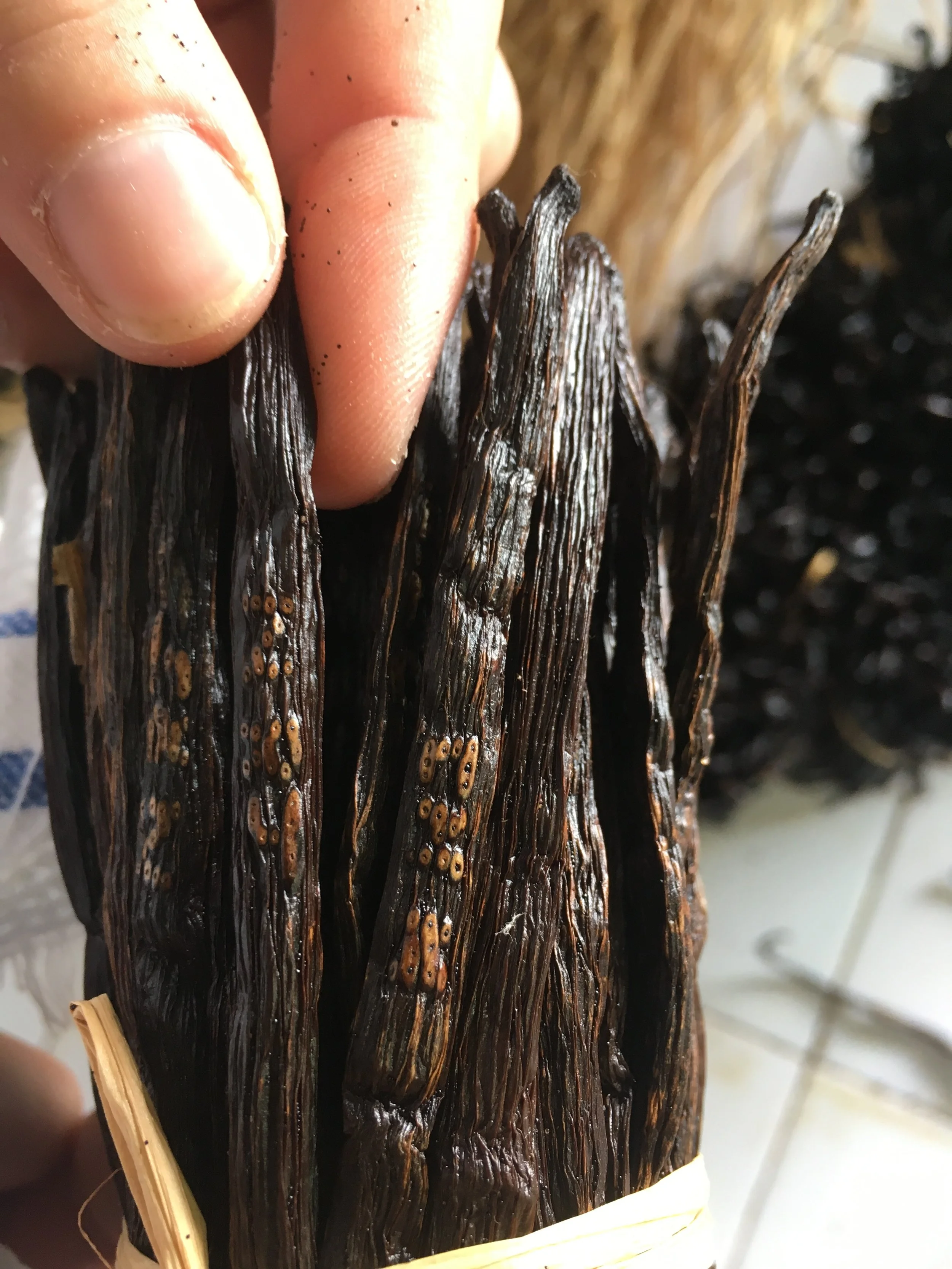
Vanilla - Madagascar



Bulgaria Rose Working Group
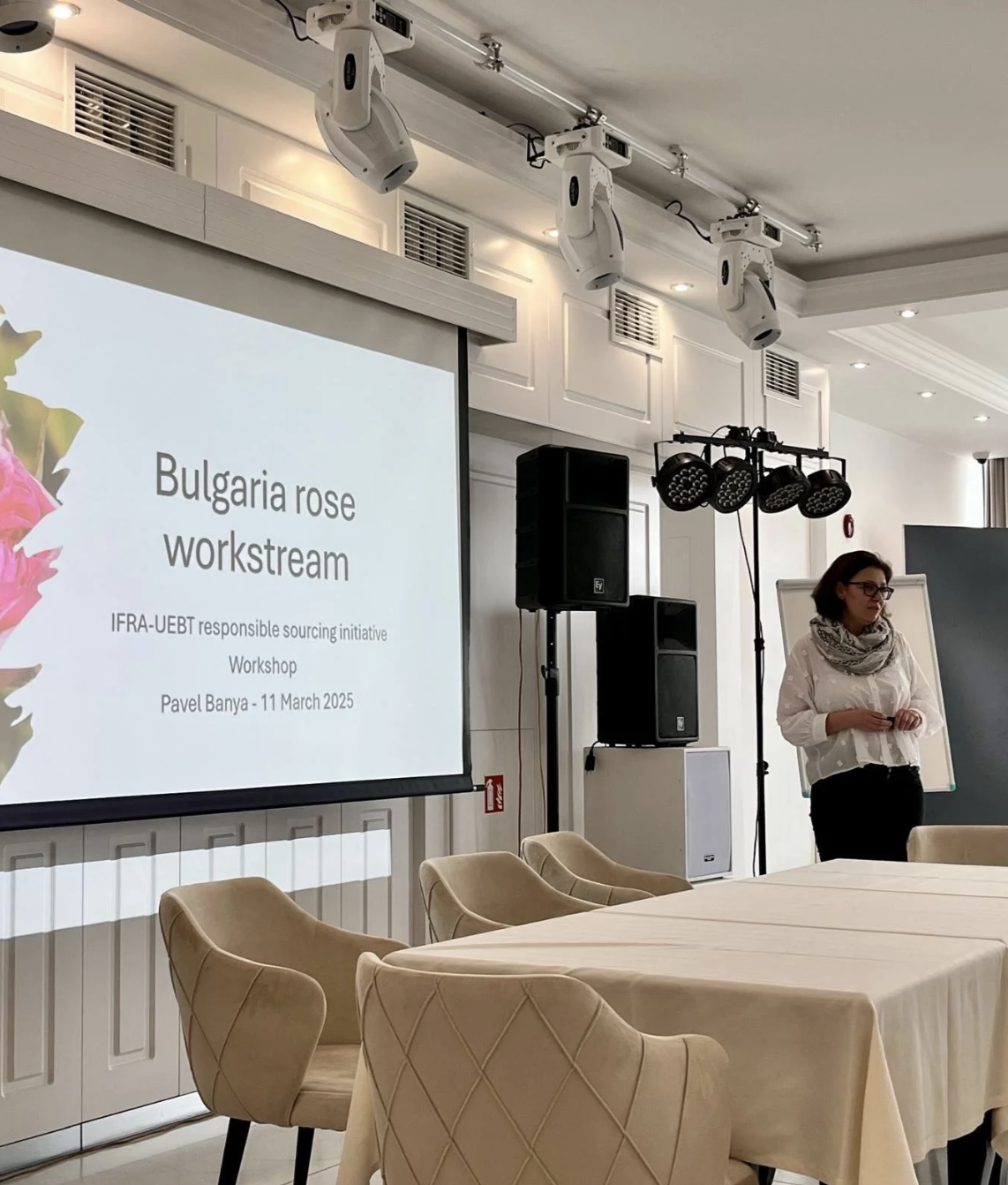
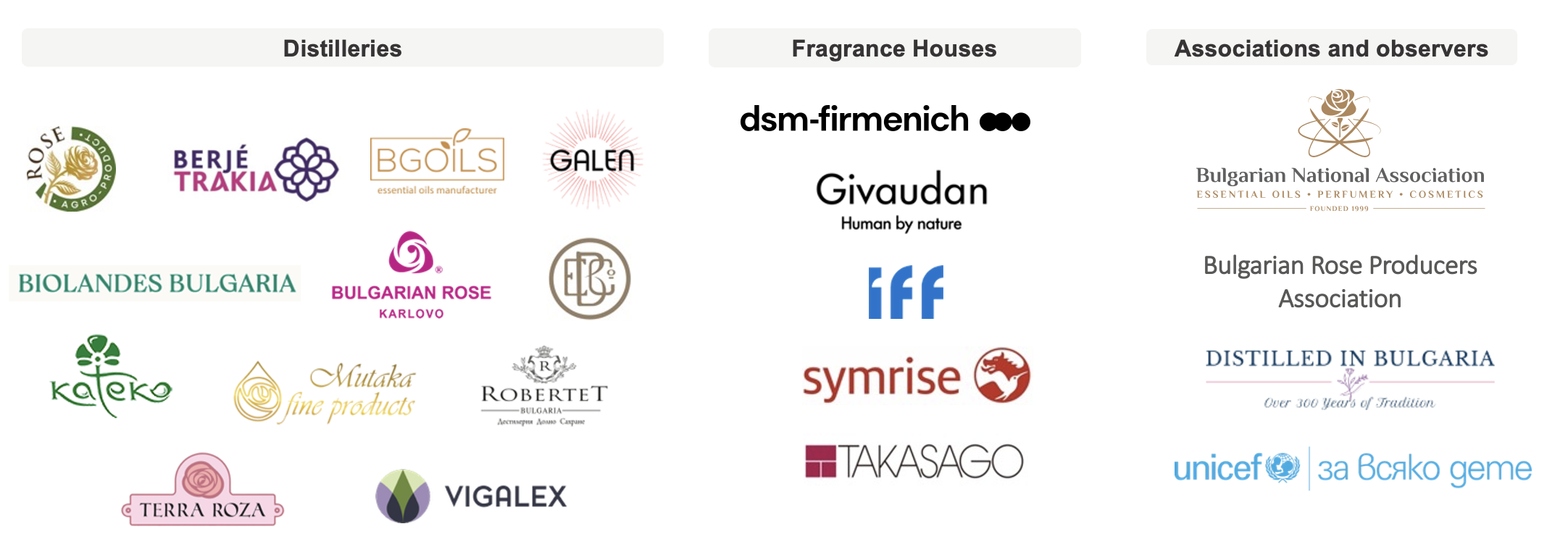
The Bulgaria Rose Working Group, launched in March 2025 brings together rose producers, distilleries, fragrance houses, and local and national associations to collectively strengthen responsible sourcing in the Bulgarian rose sector. Prior groundwork—including risk mapping and multistakeholder dialogue—set the stage for this collaboration.
Work in 2025 focused on understanding and developing approaches to address key social and environmental risks such as child labour, informal work, and inappropriate agrochemical practices. Activities included training of companies, farmers, and pickers, establishing a qualitative baseline of risks, gaps and good practices in the Bulgaria rose sector and developing a strategy for further collaboration and joint action on the ground. UNICEF Bulgaria is an observer and key implementing partner. See members below.

5. Regenerative Programme Evolution
Most companies frame their biodiversity strategies along a continuum—from reducing negative impacts to actively regenerating ecosystems. Promoting regenerative supply chains, whether certified, verified, or following their own robust internal standards, has become a tangible way to advance the ‘regenerative’ end of that continuum.
In this context, UEBT’s Regenerative Programme continued to evolve in 2025, strengthening the foundations needed to scale regenerative practices across priority botanicals and landscapes. Work this year focused on establishing baselines, deepening engagement, and building the technical groundwork for long‑term restoration outcomes.
2025 Highlights
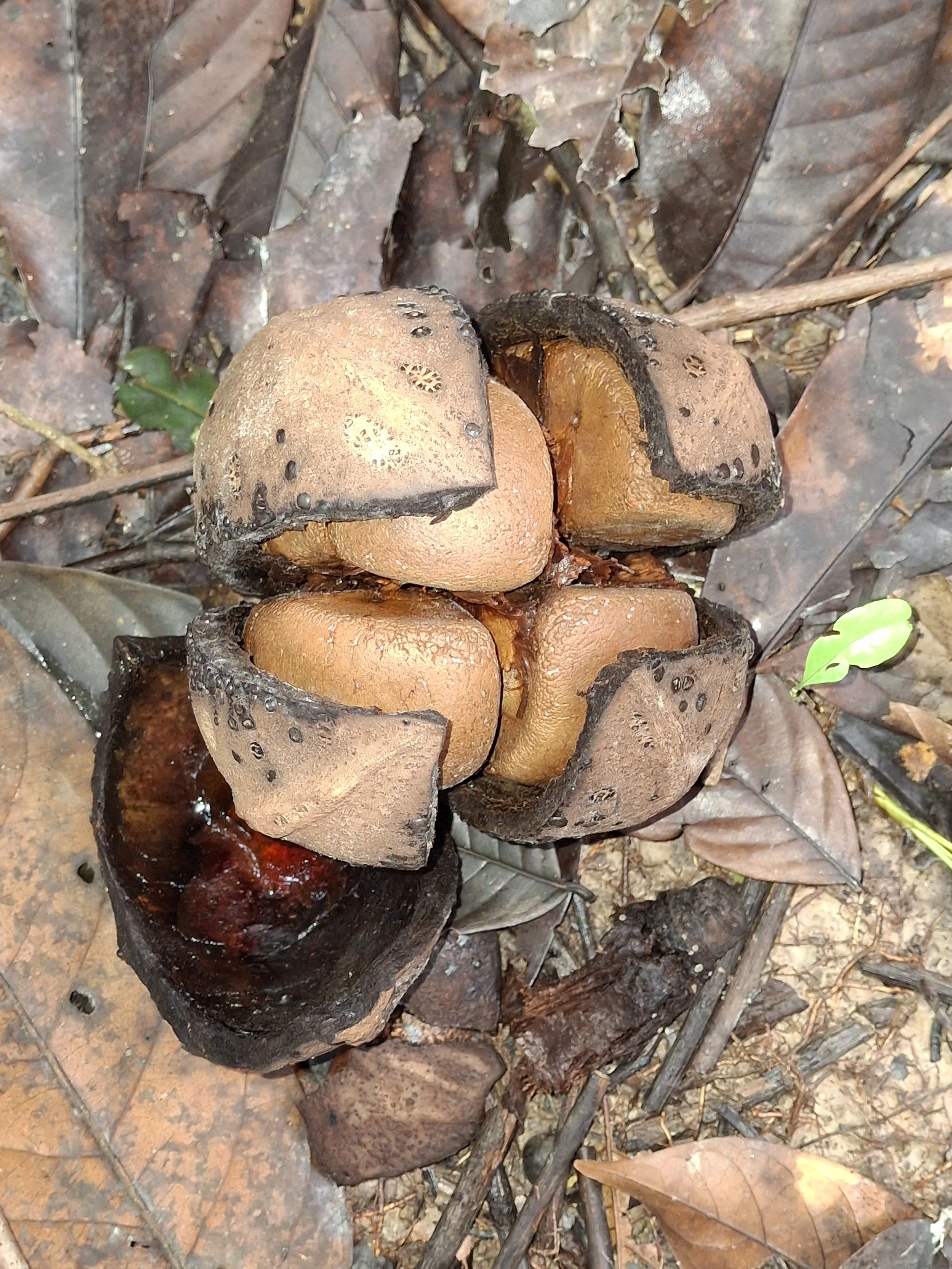
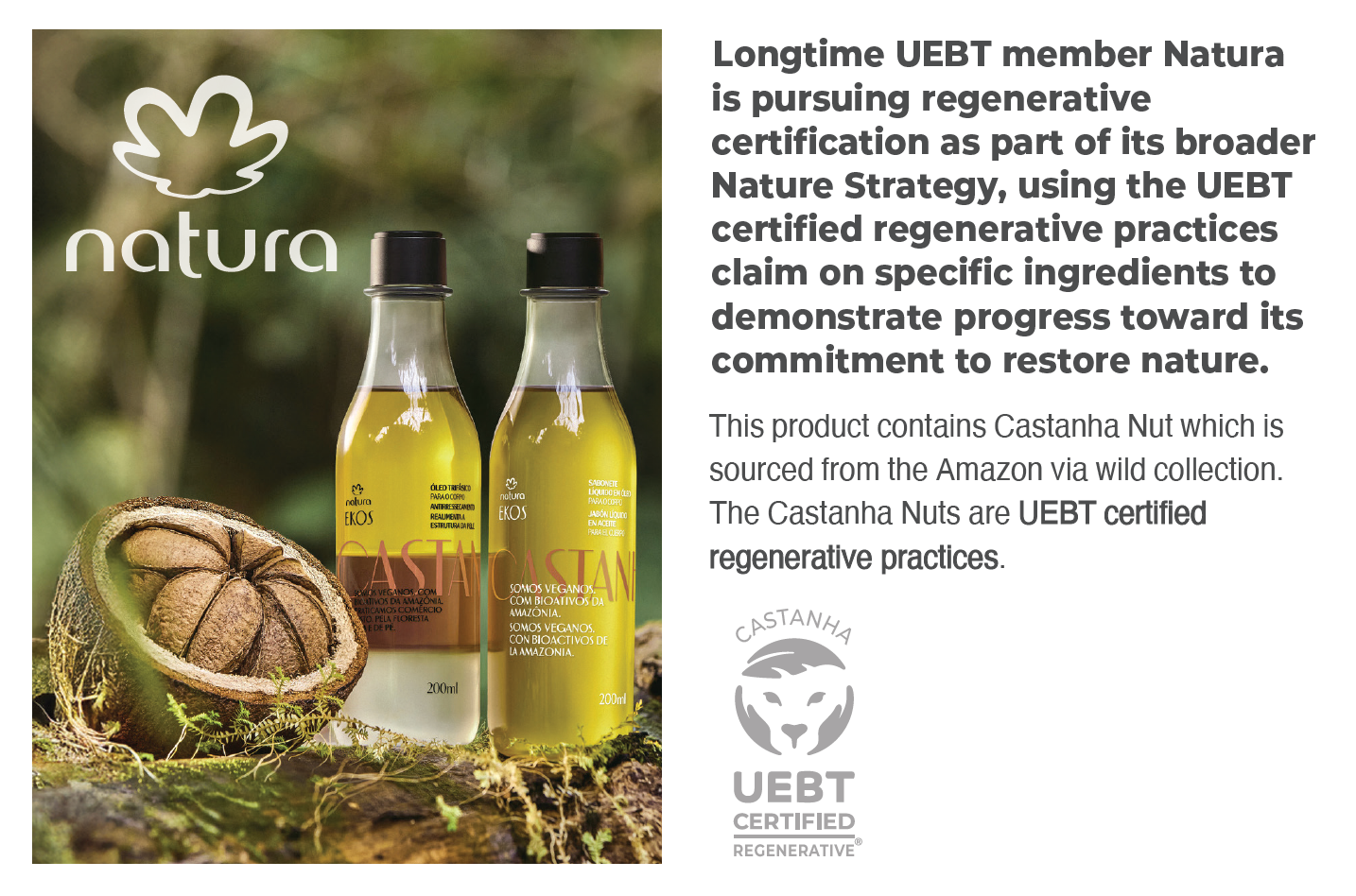
Established regenerative design across botanical supply chains in partnership with UEBT members and partners in Açaí, Castanha, Babaçu, Rooibos, Vanilla, Citrus, Rose, Cassia, Chamomile and several other supply chains.
Completed biodiversity assessments in cultivation, wild collection, and agroforestry systems, documenting native species and ecological functions.
Delivered good agricultural practices and regenerative training to producer groups and cooperative leaders.
Consolidated baselines regenerative indicator assessments through remote sensing.
Provided independent assurance against the regenerative add-on to the UEBT standard to validate progress made via UEBT assessment programmes such as certification.

6. Supply Chain Assessments
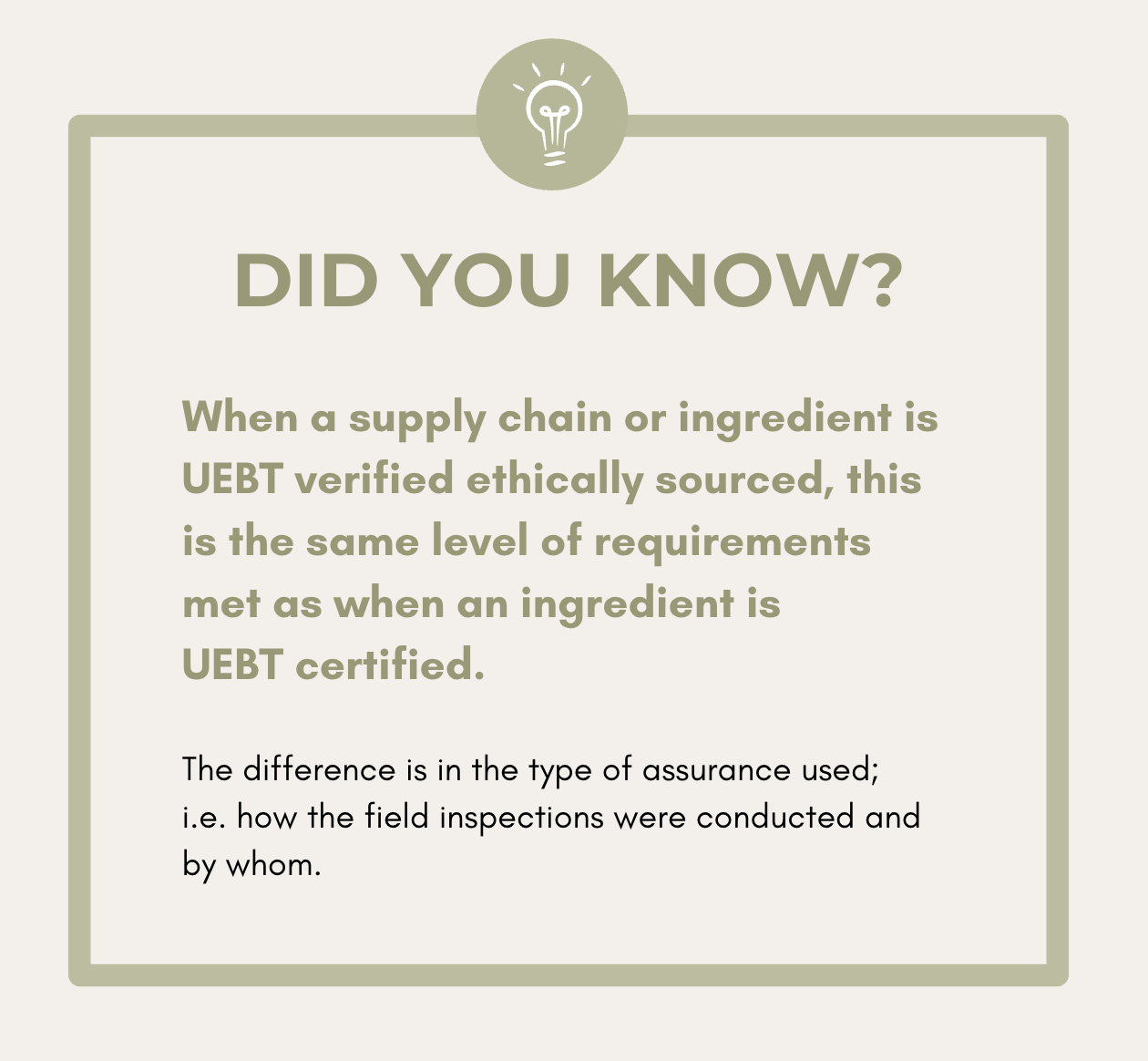
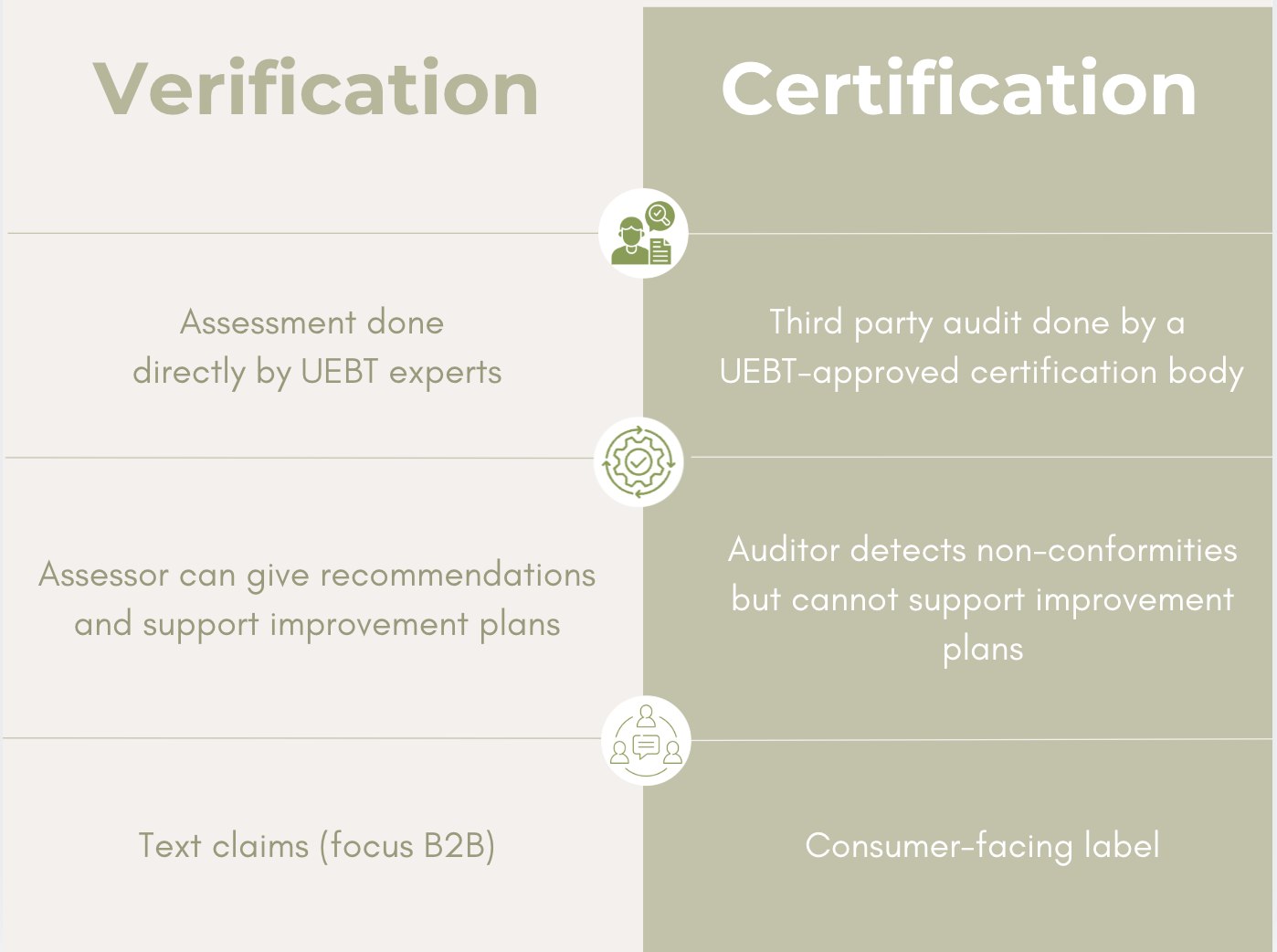
As part of our 2030 Strategy, UEBT works with companies to foster improvements and impacts in sourcing areas. We continued in 2025 to offer supply chain assessments via the UEBT verification and certification programmes. UEBT assessments are based on the UEBT standard that covers highly relevant social and environmental issues in botanicals sourcing. In supply chain assessments, independent experts check whether the practices promoted by the UEBT standard are sufficiently applied in the sourcing areas, and they also check local processing operations.
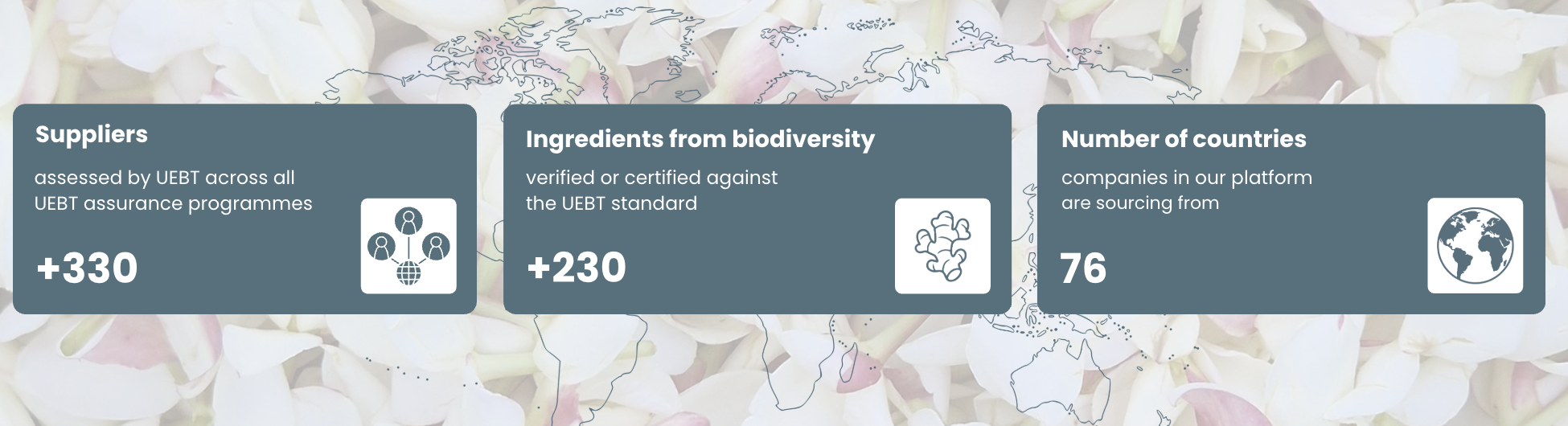
Some facts and figures in 2025:
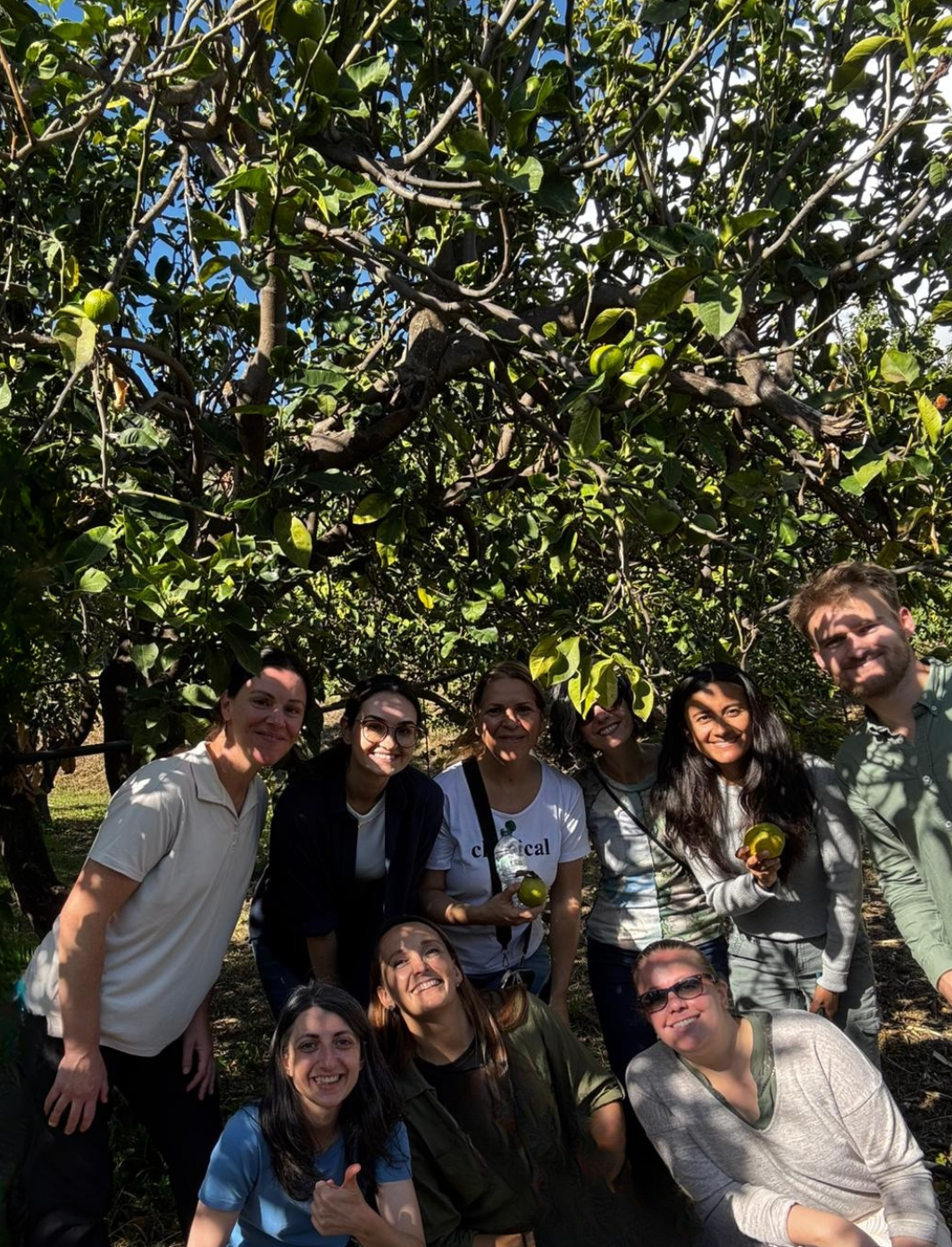
UEBT verification and part of Biodiversity teams in Calabria.
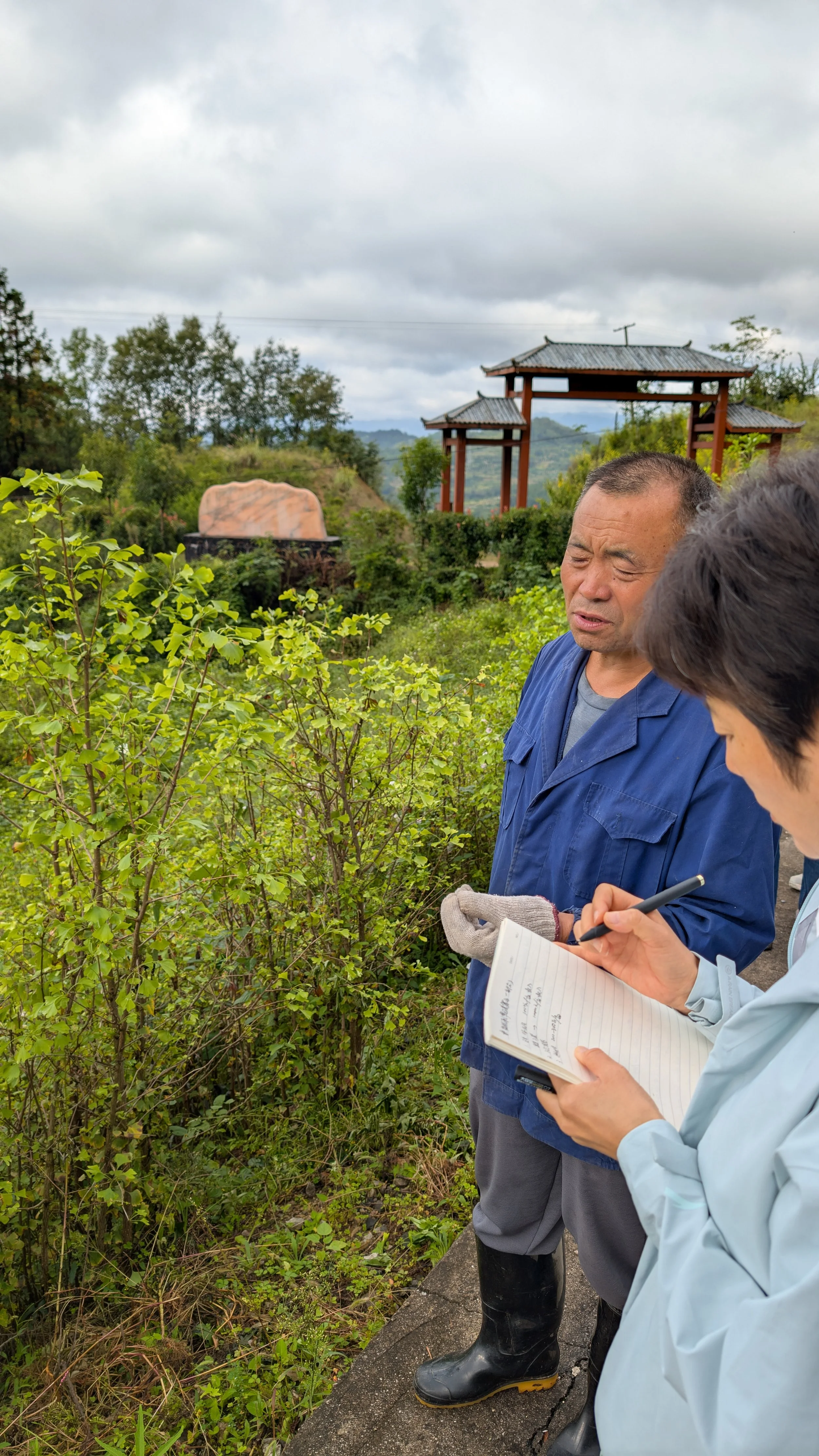
Angela in China for Gingko biloba
Testing novel assessment and verification approaches and data platforms
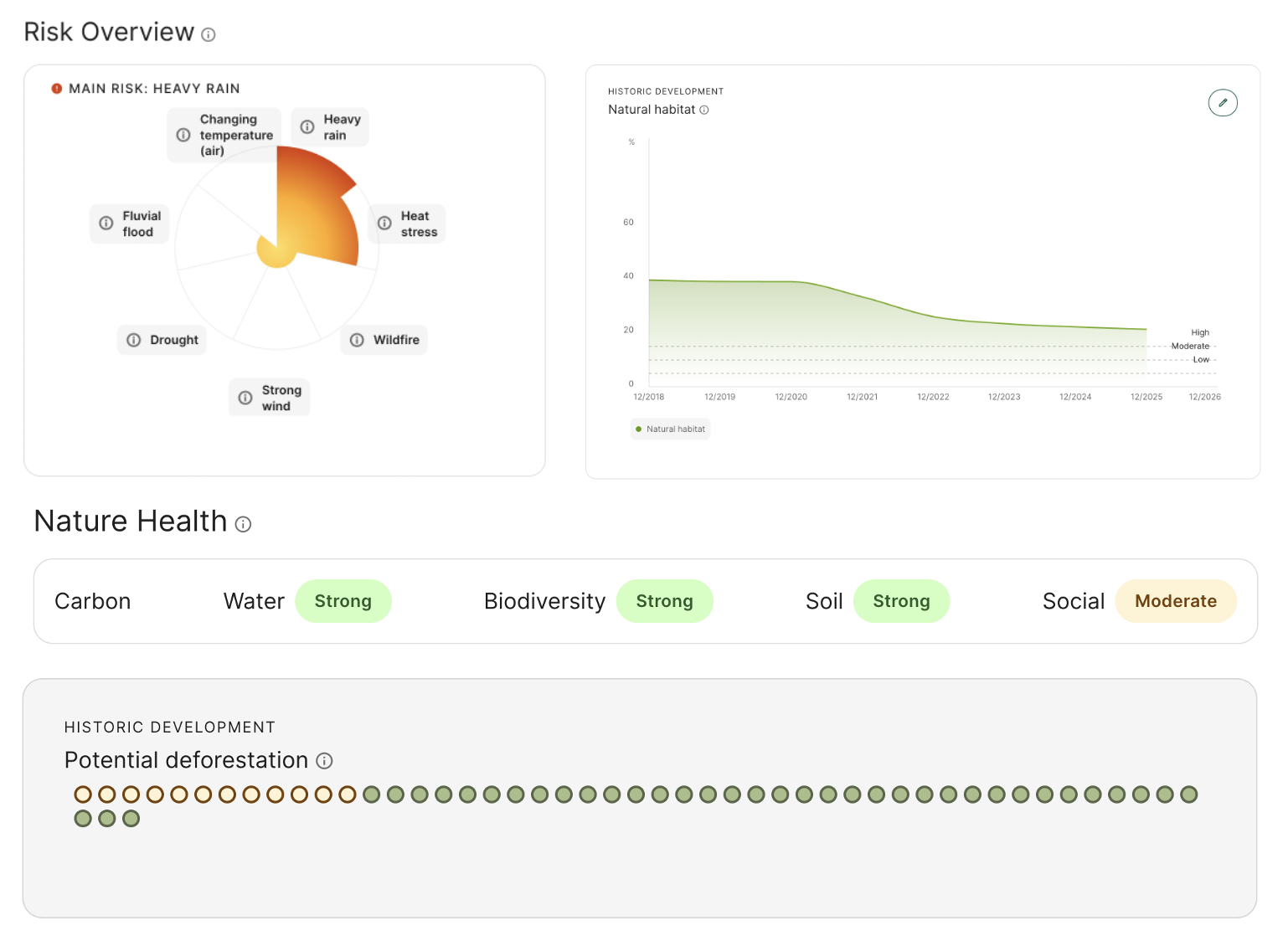
Platform
In 2025, UEBT further rolled out an ambitious innovation project (which had launched in mid-2024) to pilot and test novel assurance and verification approaches across several sourcing landscapes, supporting local companies, farmers, and wild collectors in responding to emerging due diligence requirements. Recognising that traditional auditing models can be resource-intensive and burdensome—particularly for small producers—UEBT is leading this two-year project to modernise assurance to redirect resources toward measurable local impact, while ensuring that increasing data and compliance expectations are managed more efficiently. These activities took place in 2025 and are ongoing into 2026:
UEBT is aligning its assurance programmes—including the UEBT/Rainforest Alliance Herbs & Spices Programme—with evolving regulatory frameworks such as the EU Deforestation Regulation (EUDR), the Corporate Sustainability Reporting Directive (CSRD), and the Corporate Sustainability Due Diligence Directive (CSDDD).
UEBT is piloting remote sensing and soil and water monitoring technologies to complement traditional assessments; and testing digital data solutions tailored for local producers and processors. Several pilots were well underway throughout 2025 with more to be completed in 2026.
Lessons learned will be actively shared among supply chain actors and across the wider sustainability assurance community, positioning UEBT in advancing innovative, credible, and impact-driven assurance systems for responsible botanical sourcing.
This project was made possible thanks to a grant from the ISEAL Innovations Fund, which is supported by the Swiss State Secretariat for Economic Affairs SECO and UK International Development from the UK government.

7. Platform for Companies
Members’ exchange highlights
The 2025 UEBT Member Exchange, held at the Sourcing with Respect Conference in Amsterdam and attended by 112 participants from 95 members brought companies together to discuss climate resilience in botanical supply chains, pre‑competitive collaboration, responsible purchasing, and strategies to strengthen livelihoods in sourcing communities. Discussions emphasized the need for shared financing of biodiversity‑friendly practices, stronger data platforms for monitoring climate impacts, and sector‑level working groups to address common risks. Members also provided input on the UEBT Standard revision—advocating for continuous improvement approaches, pragmatic requirements for mapping and watershed management, and the integration of novel audit technologies—while highlighting the importance of long‑term partnerships, transparency, and locally grounded human rights and living‑income strategies in advancing responsible botanical sourcing.
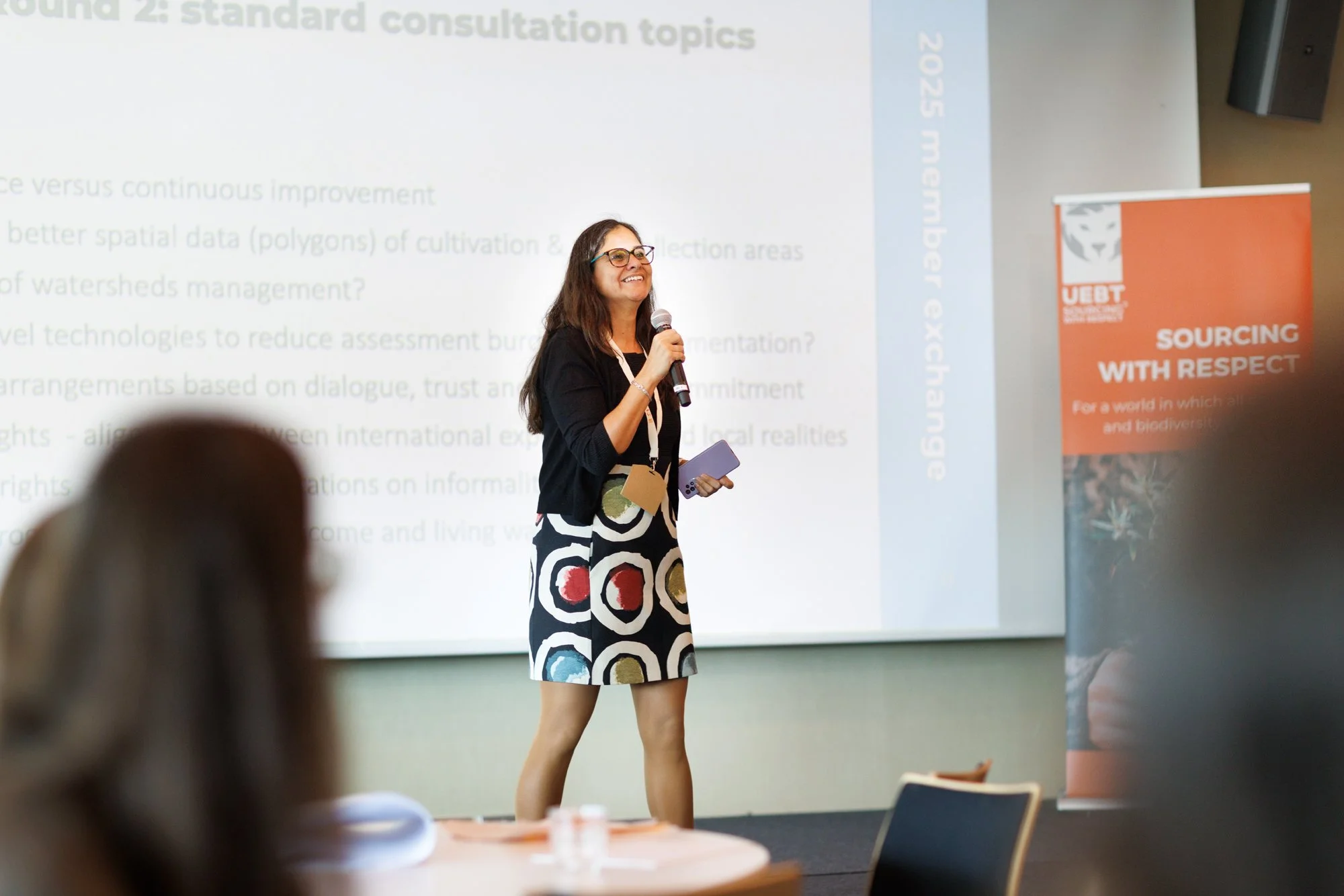



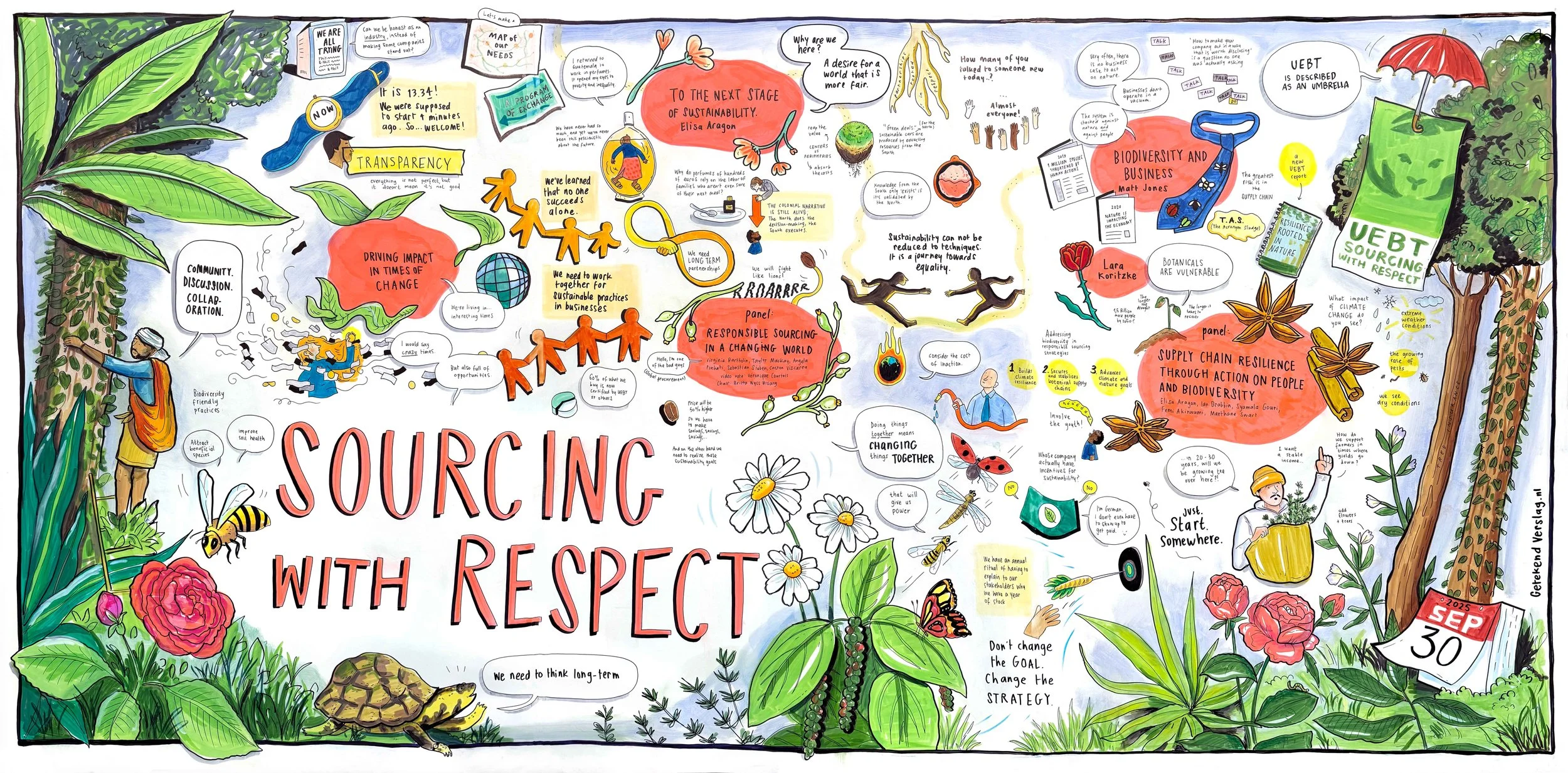
Sourcing with Respect Conference
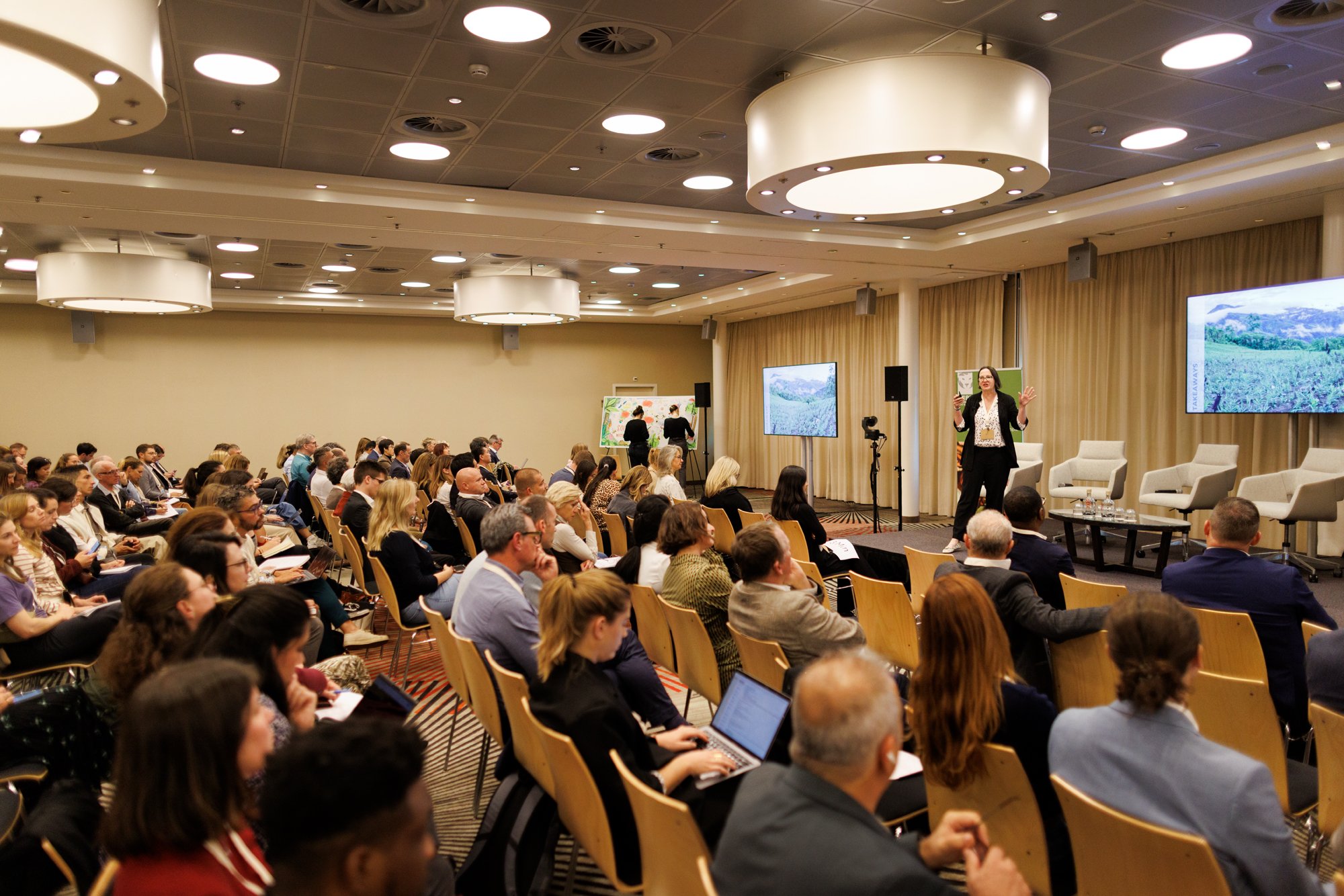
Launch of UEBT publication: Resilience Rooted in Nature
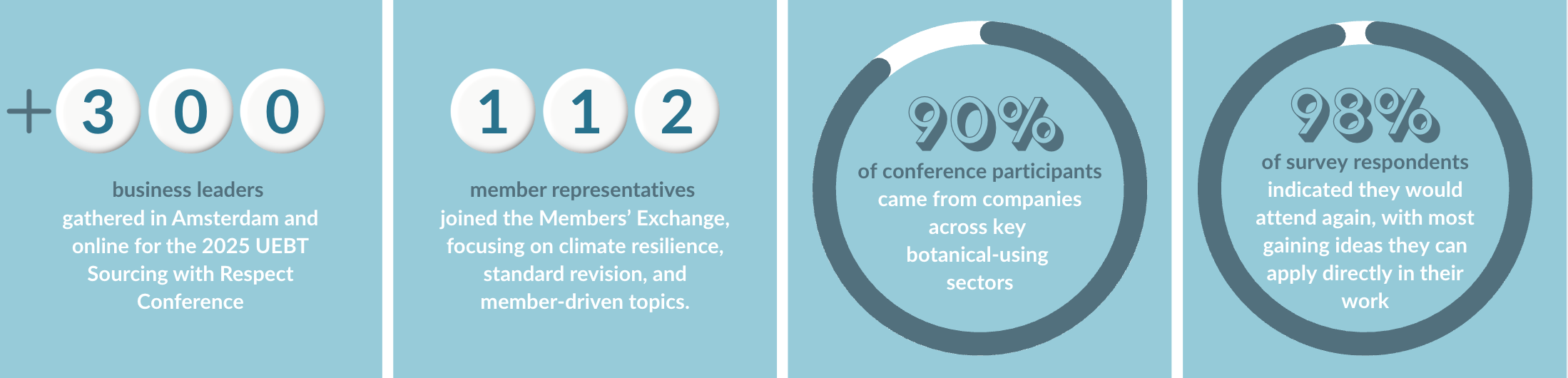
More than 300 business leaders gathered in Amsterdam and online for the 2025 UEBT Sourcing with Respect Conference—an annual moment for companies across beauty, botanicals, food and beverage, natural pharmaceuticals, and flavours and fragrances to reflect on how the sector can drive impact in a time of global uncertainty. With 250 participants onsite and 70 via livestream, the event explored what it means to build resilient, future‑ready botanical supply chains in a rapidly changing world. Across plenaries and dialogues, speakers emphasised that resilience begins with people and biodiversity, and that companies must now translate risk awareness into meaningful sourcing action.
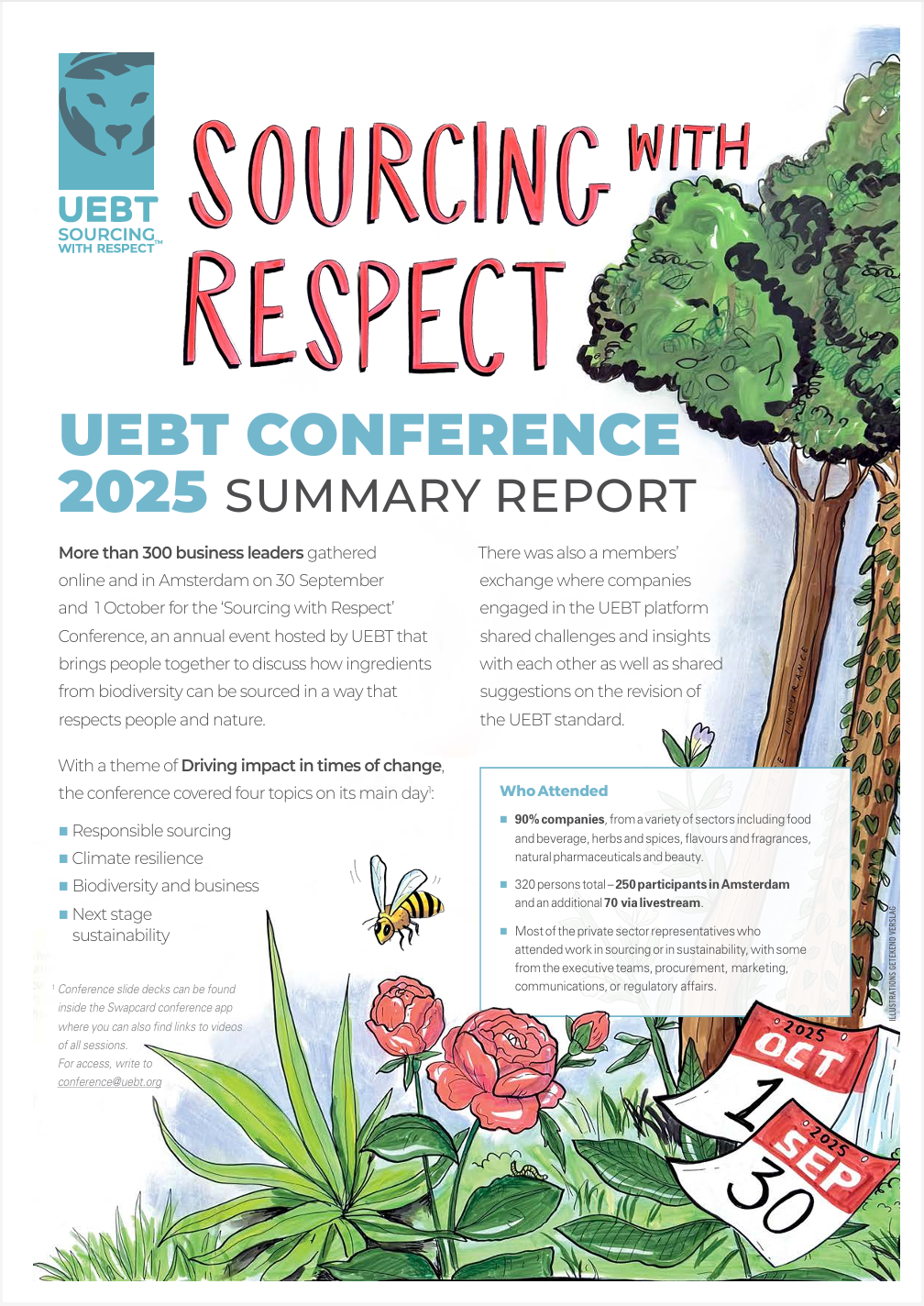
UEBT Conference 2025 - Summary report
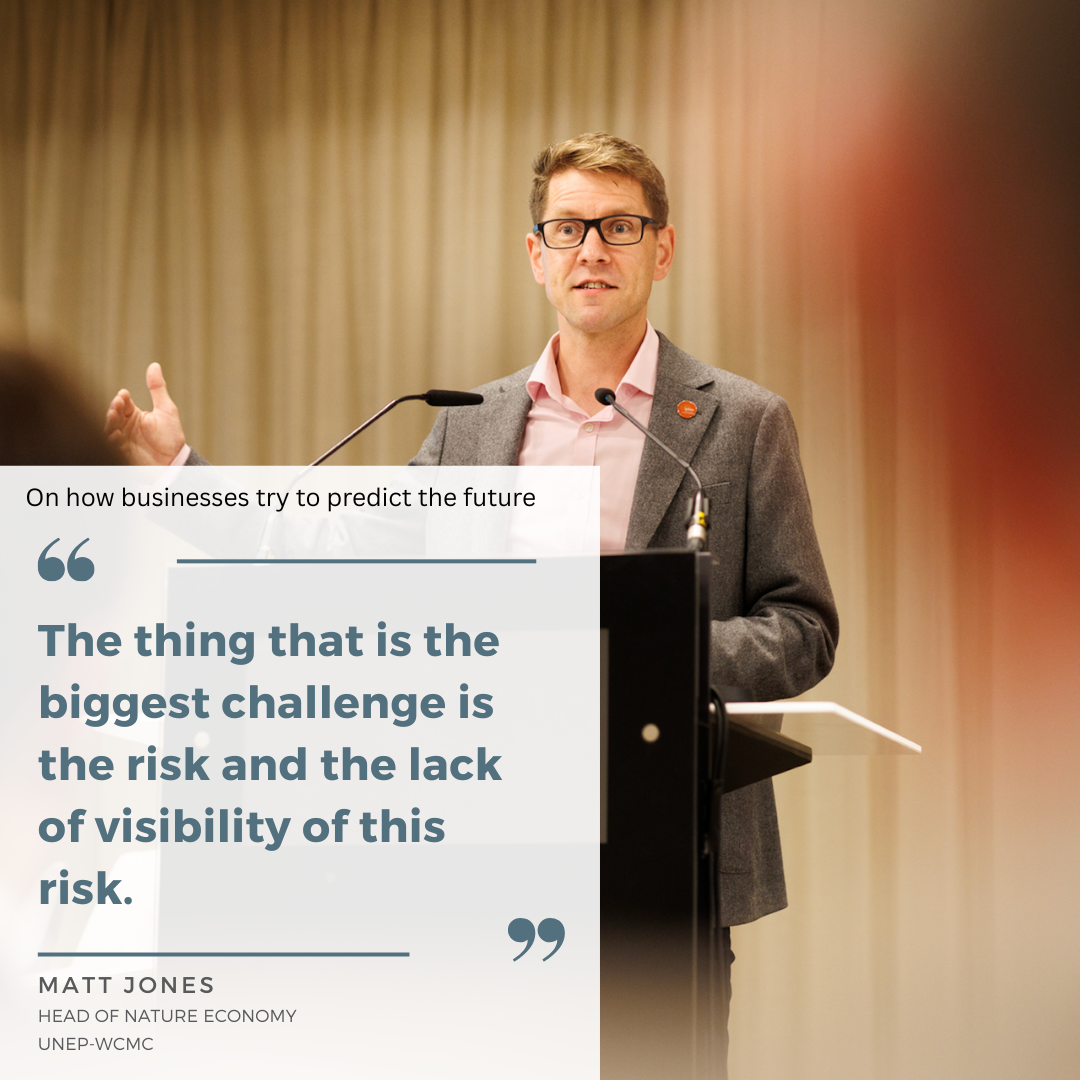
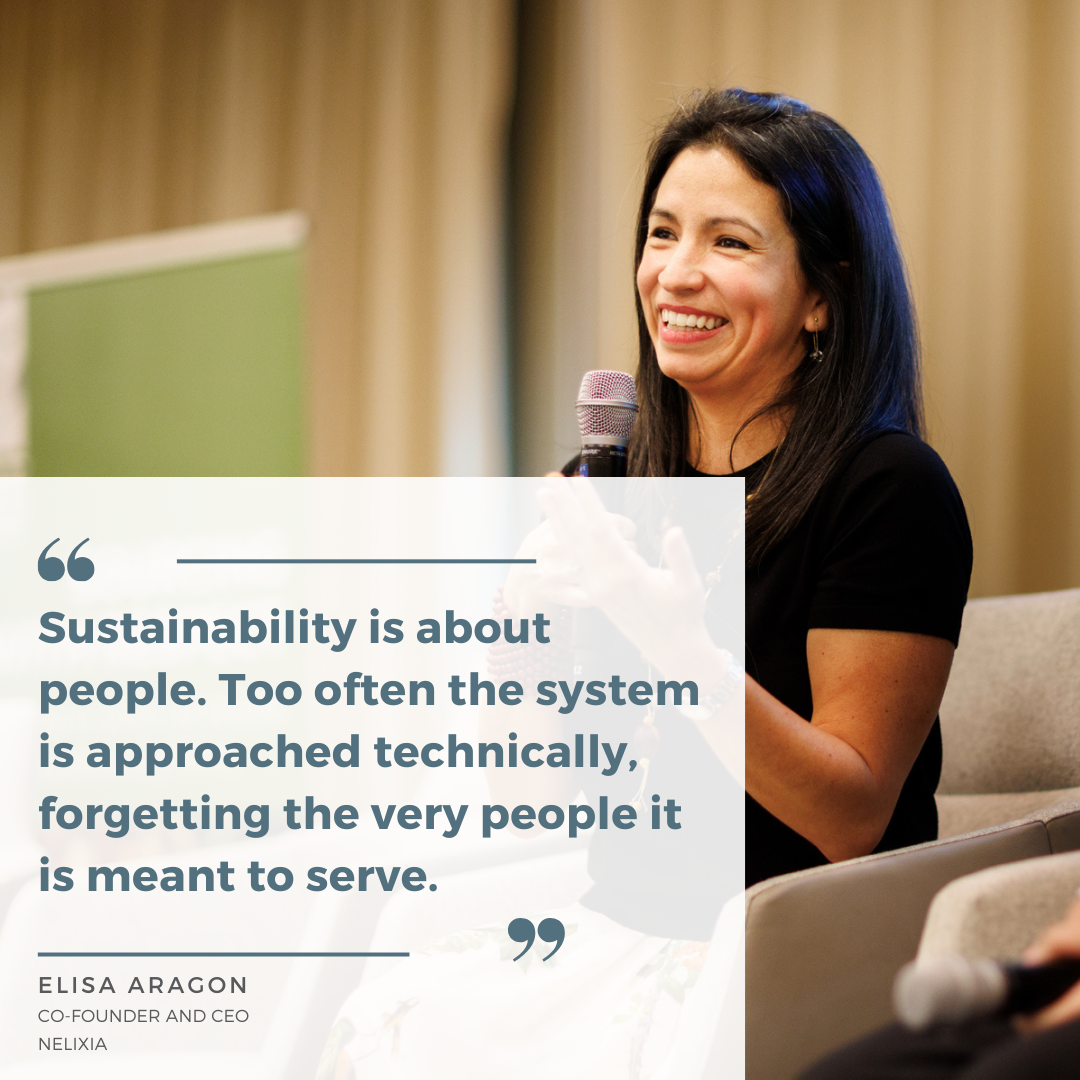
The conference opened with a call to action highlighting both the volatility and possibility of this moment for business. Insights from UEBT’s report Resilience Rooted in Nature set the tone, showing how biodiversity‑friendly sourcing strengthens climate adaptation and stabilizes supply. Leadership keynotes from UNEP‑WCMC and Nelixia underscored the growing urgency: businesses face unprecedented uncertainty and must balance technical systems with the human realities in sourcing landscapes. Day‑two breakouts dove into practical solutions—from integrating botanicals in nature frameworks to real‑world due diligence challenges and local actions on human rights and biodiversity. Panelists stressed long‑term partnerships, the need to shift away from transactional sourcing, and the importance of framing biodiversity actions as core to climate resilience and business continuity.
Key Highlights
90% of conference participants came from companies across key botanical‑using sectors.
100+ member representatives joined the members’ exchange, focusing on climate resilience, standard revision, and member‑driven topics.
Biodiversity‑friendly practices were shown to improve soil health, stabilize yields, and strengthen resilience against climate‑driven risks to botanicals.
98% of survey respondents indicated they would attend again, with most gaining ideas they can apply directly in their work.
8. Financials
9. Accountability
UEBT is committed to transparency, fairness, and accountability in the way it addresses concerns related to its governance, assurance, membership, claims and standard-setting activities. An effective complaints and appeals mechanism is an essential part of this commitment and contributes to continuous improvement, risk management, and stakeholder trust.
You can read about this mechanism in our summary of grievances received and handled by UEBT during the calendar year 2025.
10. Board
UEBT Board members as of late 2025 included:

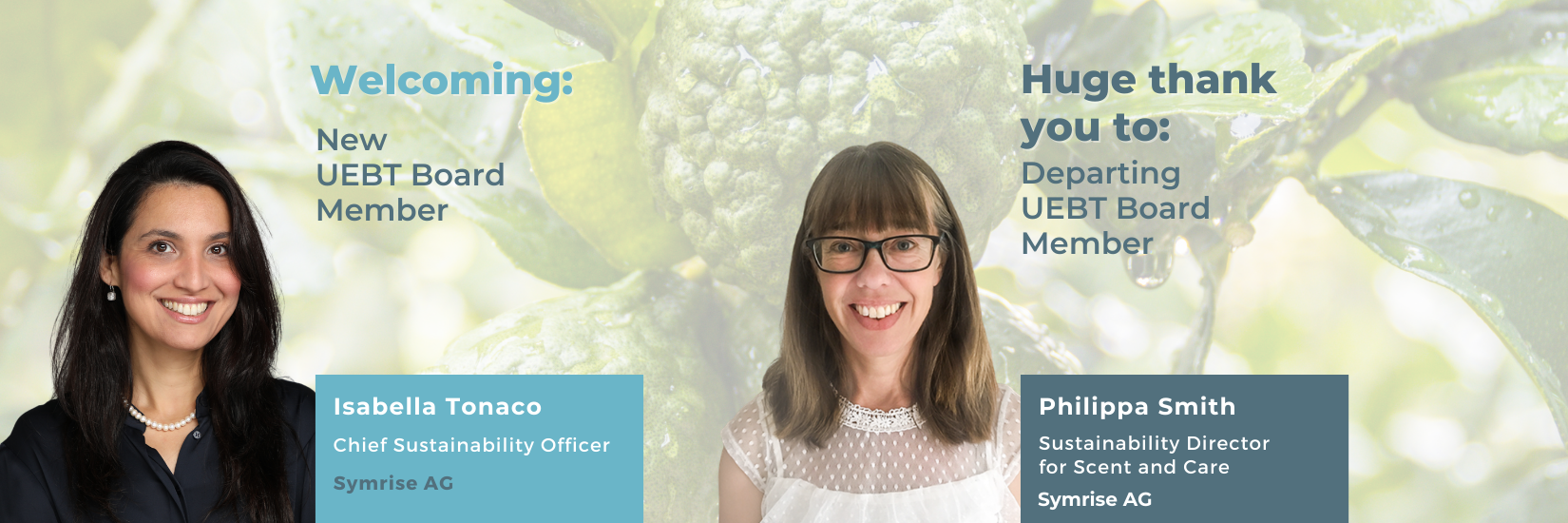
A huge thank you to Philippa Smith of Symrise for her service to the UEBT Board in 2025.
We welcomed Isabella Tonaco who joined the Board as member representative from Symrise effective January 2026.

11. Team
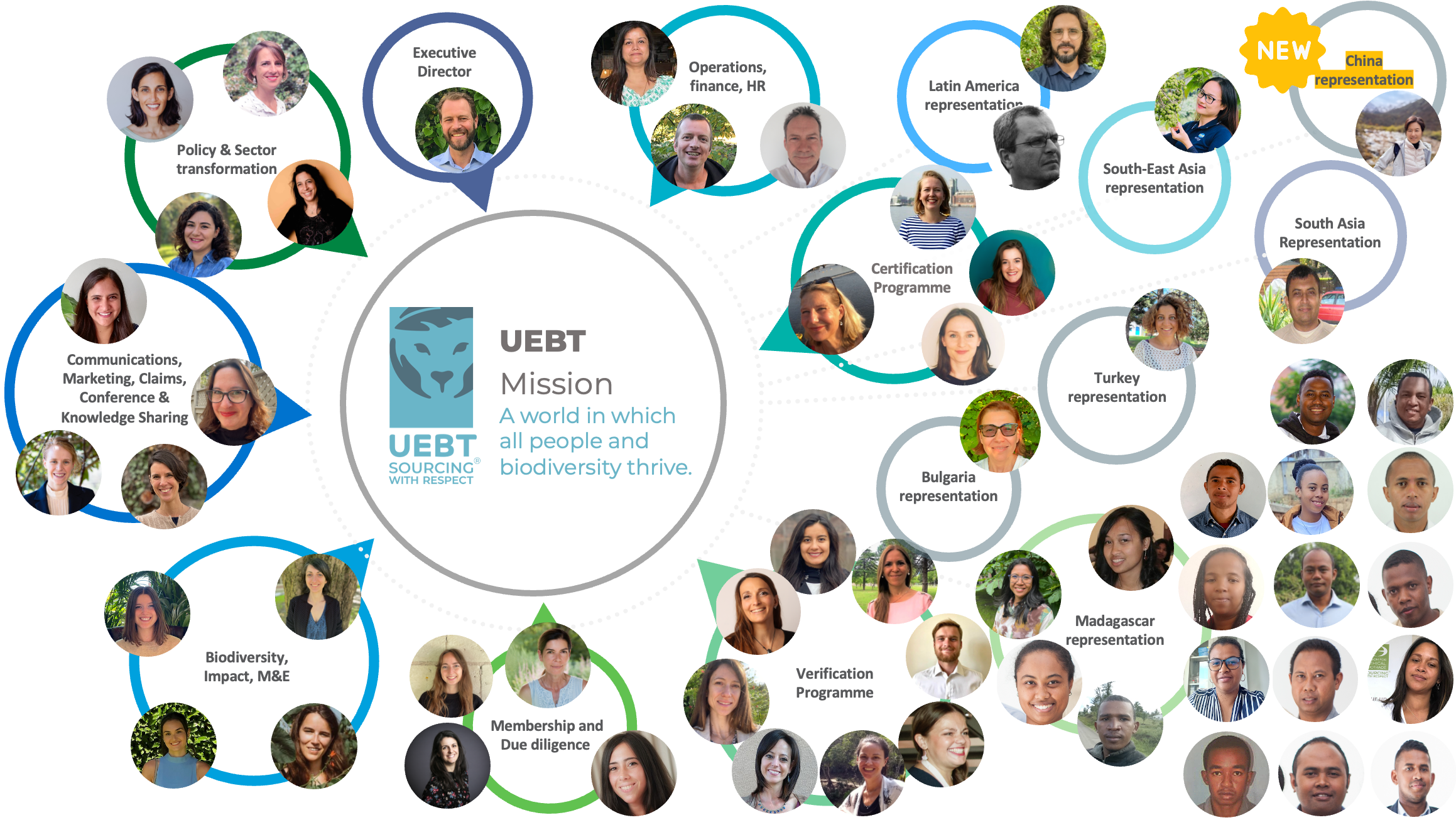
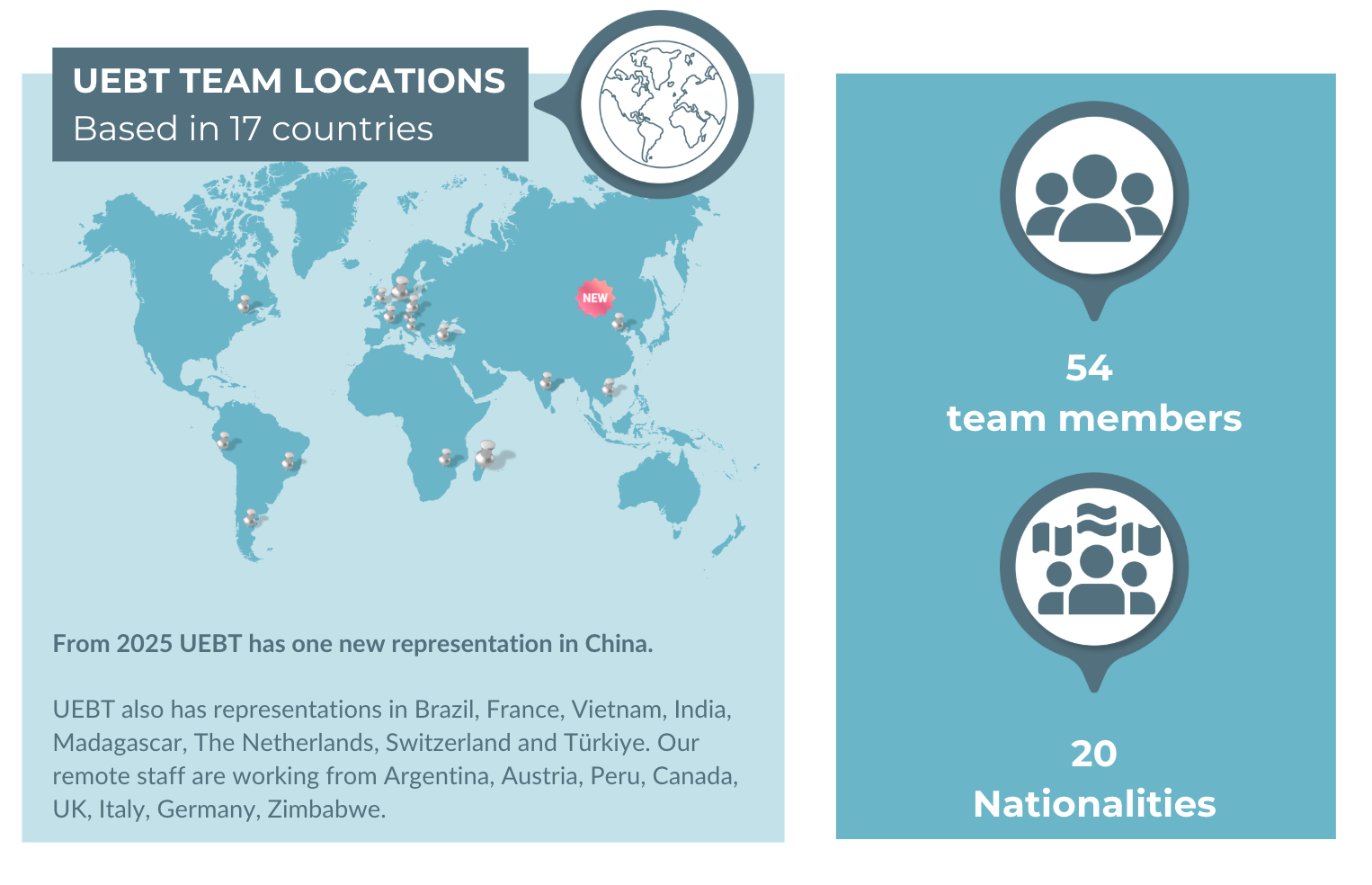
The UEBT Team of Experts as of 31 December 2025: